
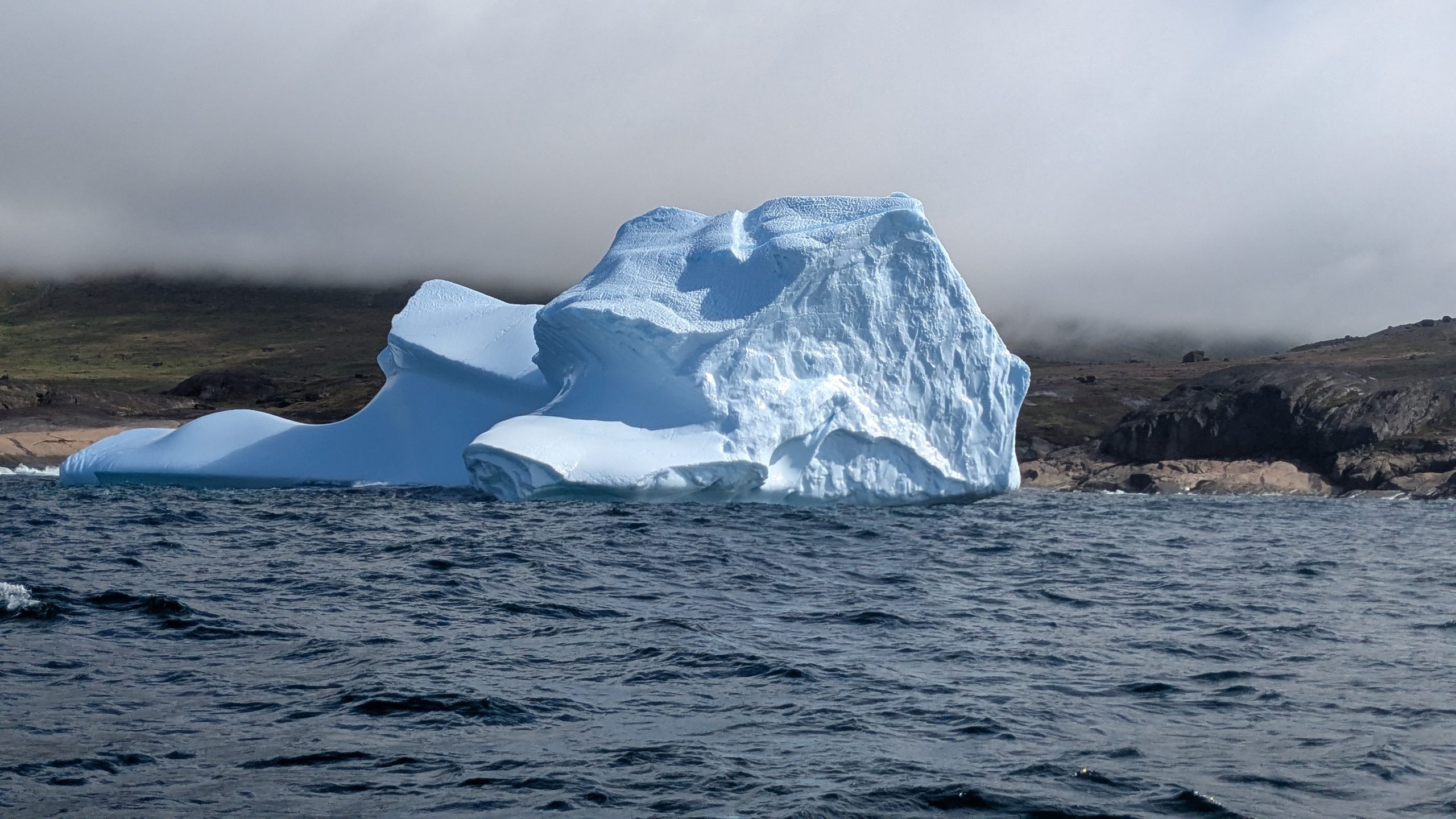
Although we were relieved to encounter minimal ice during our passage to Greenland, our arrival only heightened our eagerness to see more of it. Teaming up with Claus and Katrin from “Flinthoern,” we set a course for a dramatic fjord where a glacier plunges directly into the sea. Depending on recent calving activity, the waterway could be choked with ice, possibly making it impassable.
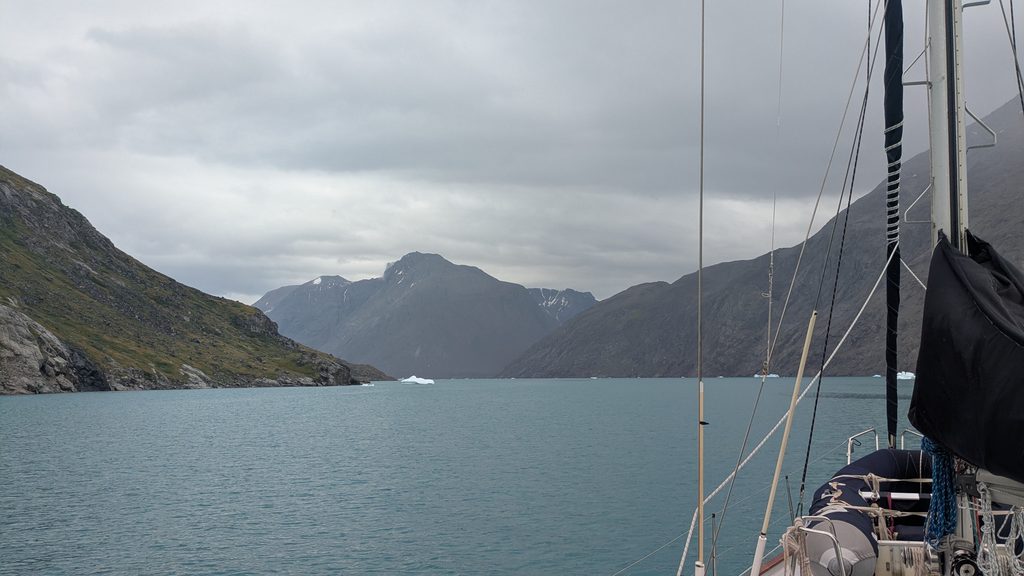
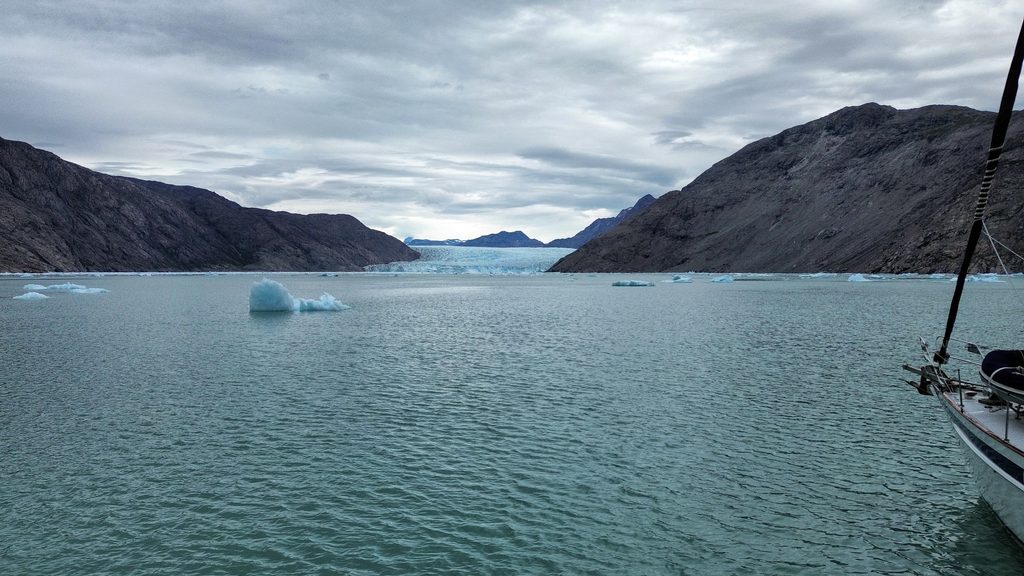
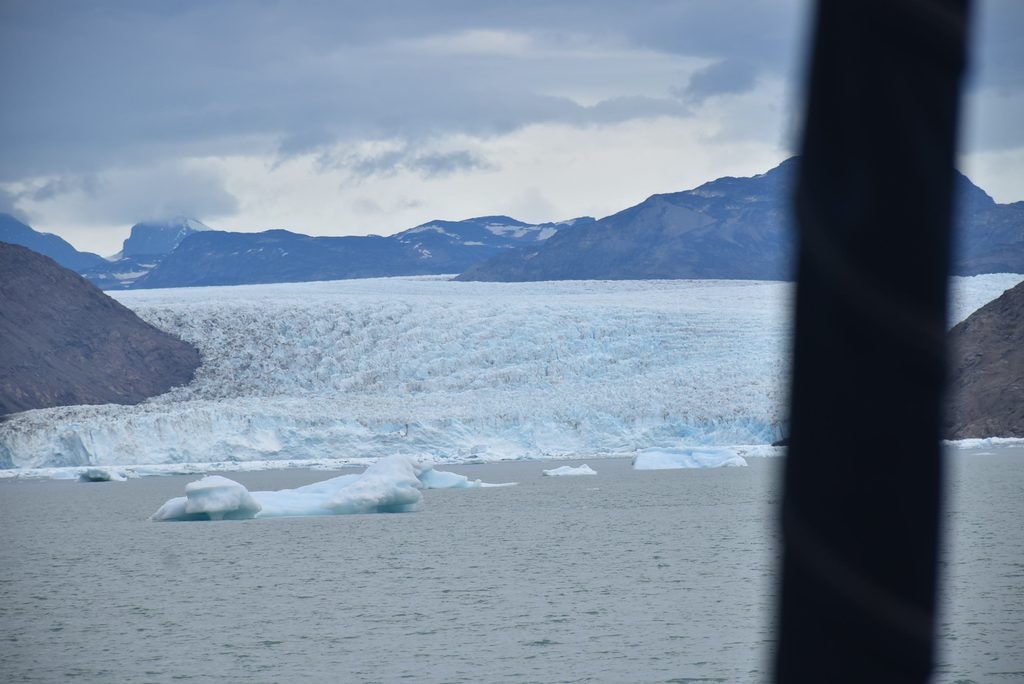
Luckily, despite several floating ice chunks at the fjord’s mouth, we enjoyed clear visibility to navigate through them. We made our way into the steep, U-shaped carved valley to get a magnificent view of the glacier—a massive, creeping river of dense ice.

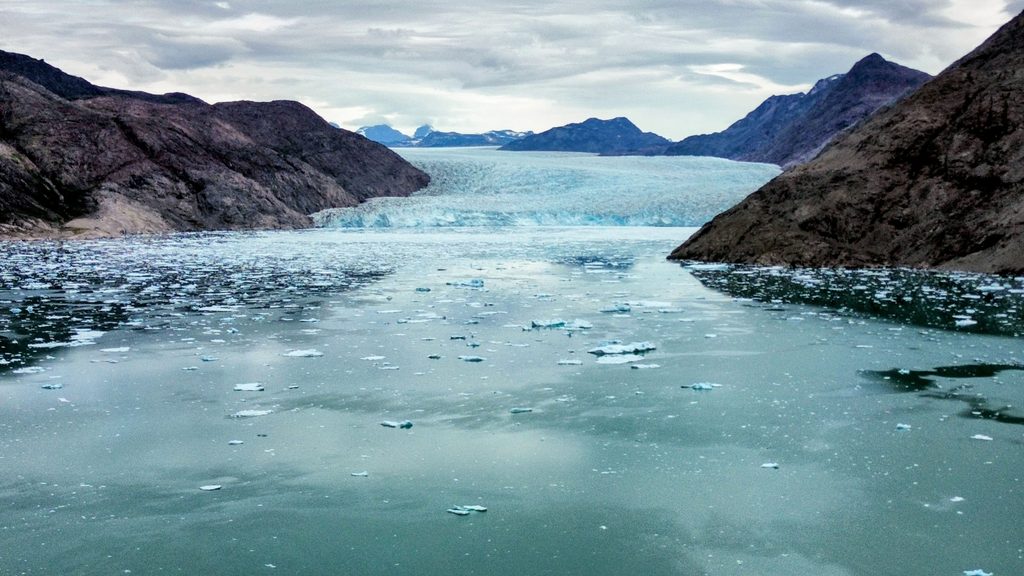
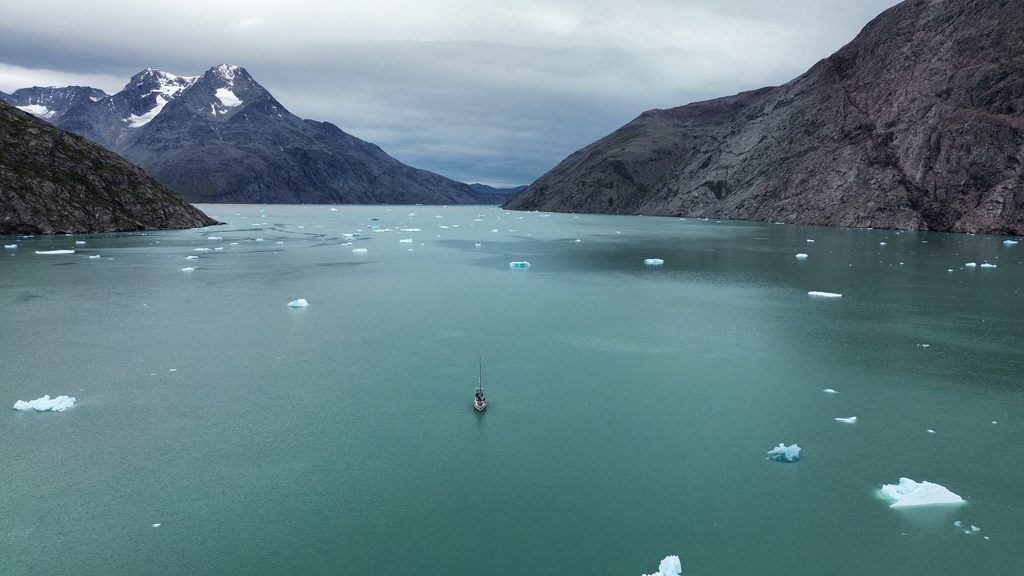
During our time in Greenland we not only ended up seeing a lot of ice, but also learned a lot about its classification which helps interpreting ice forecasts. There are
- Growlers, the smallest fragments, rising less than 1 meter (3 feet) above the water and spanning less than 5 meters (16 feet) in length (roughly the size of a car or truck) – not identifiable by radar
- Bergy Bits, larger than a growler, standing 1 to less than 5 meters (3 to 16 feet) high and 5 to 14 meters long (about the size of a small cottage or house) – normally seen on radar
- Small, Medium, Large and Very Large Bergs, ranging from the size of a small office building to icy mountains towering higher than 75 meters (240+ feet) above the surface and stretching past 200 meters (670+ feet) long – easily detected on radar
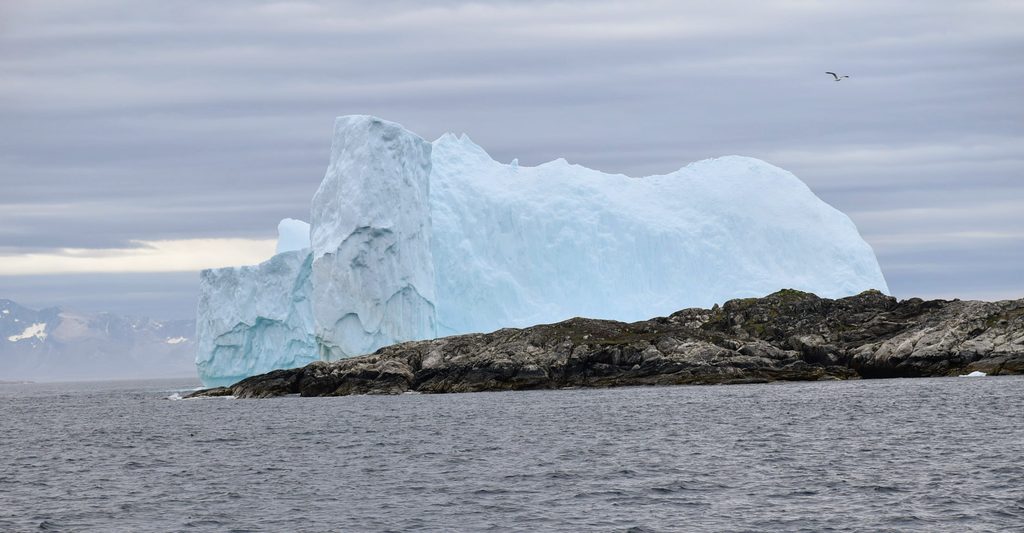
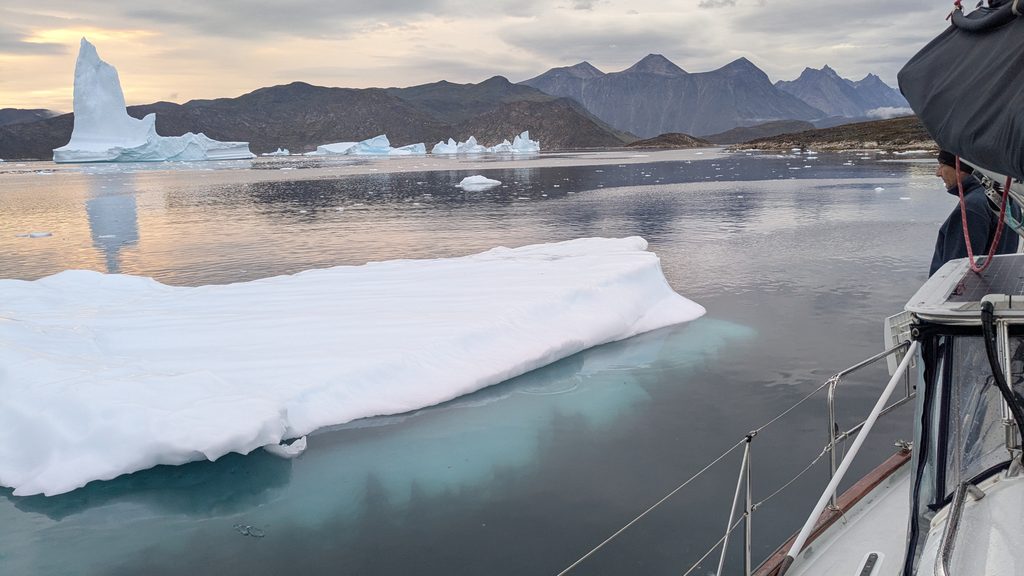
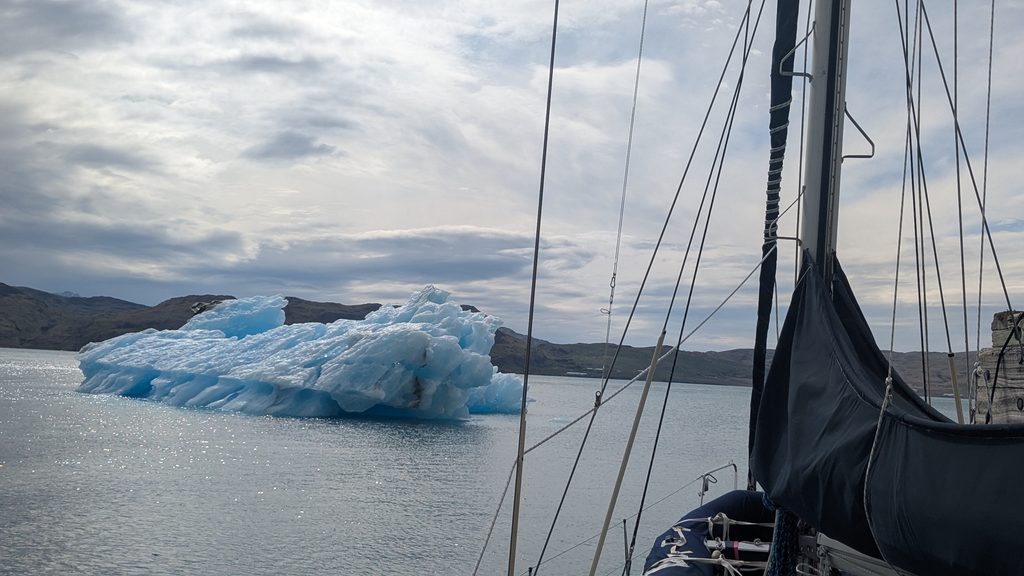
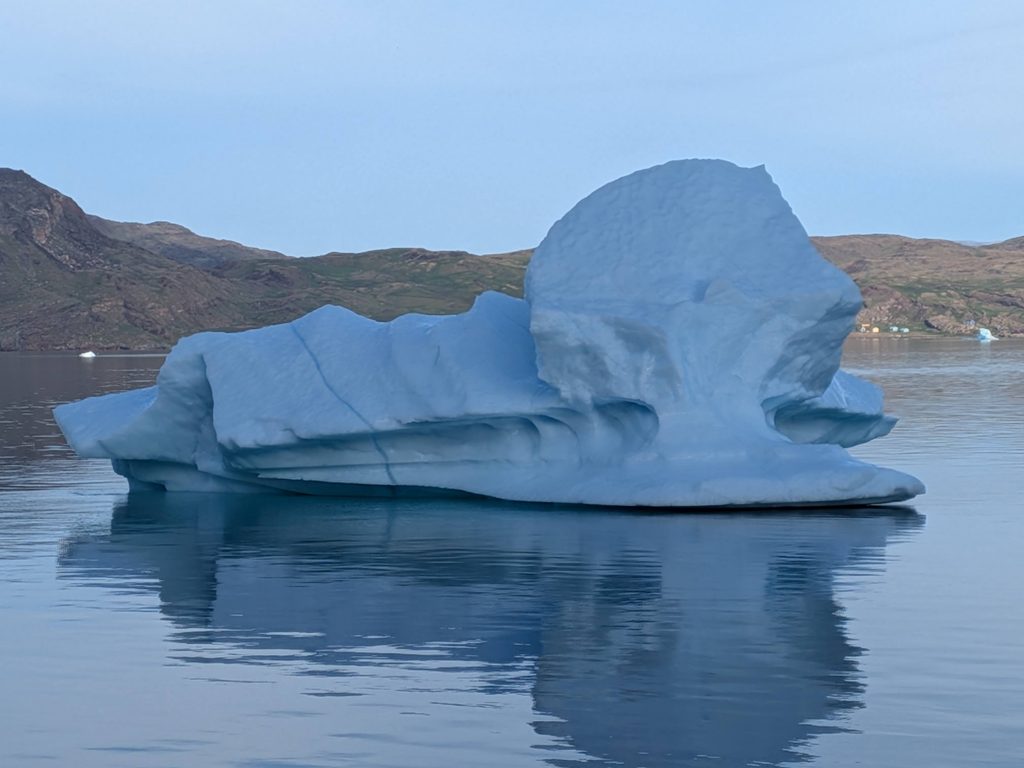
The incredible array of colors and shapes left us completely mesmerized. While most icebergs appear white due to the countless tiny air bubbles trapped within the ice, many feature striking bluish streaks. Others glow entirely with a deep cobalt blue, a glassy aquamarine hue, or absolute crystal clarity. These vibrant variations occur because the ice is exceptionally dense, lacking the air bubbles necessary to reflect white light.
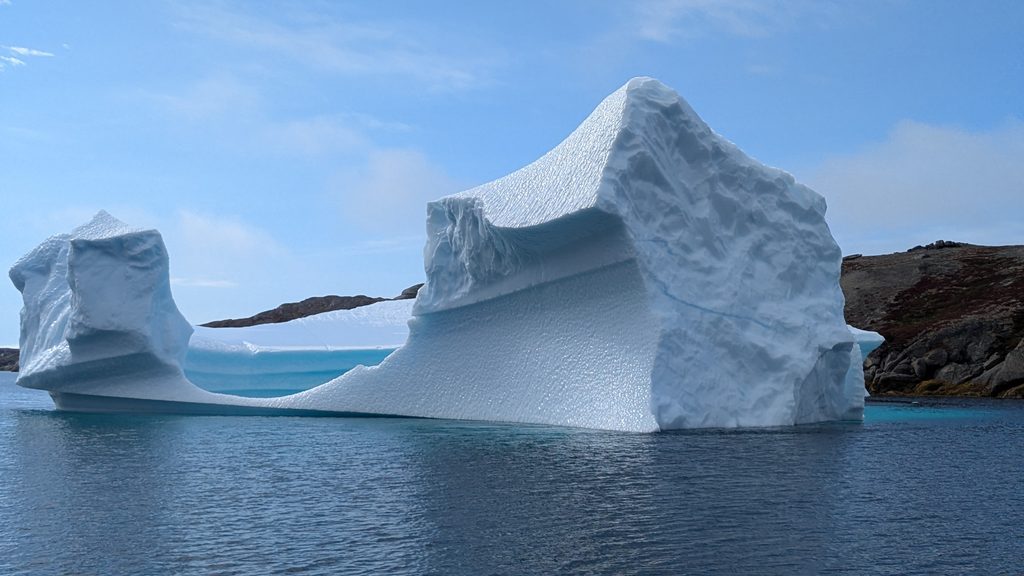
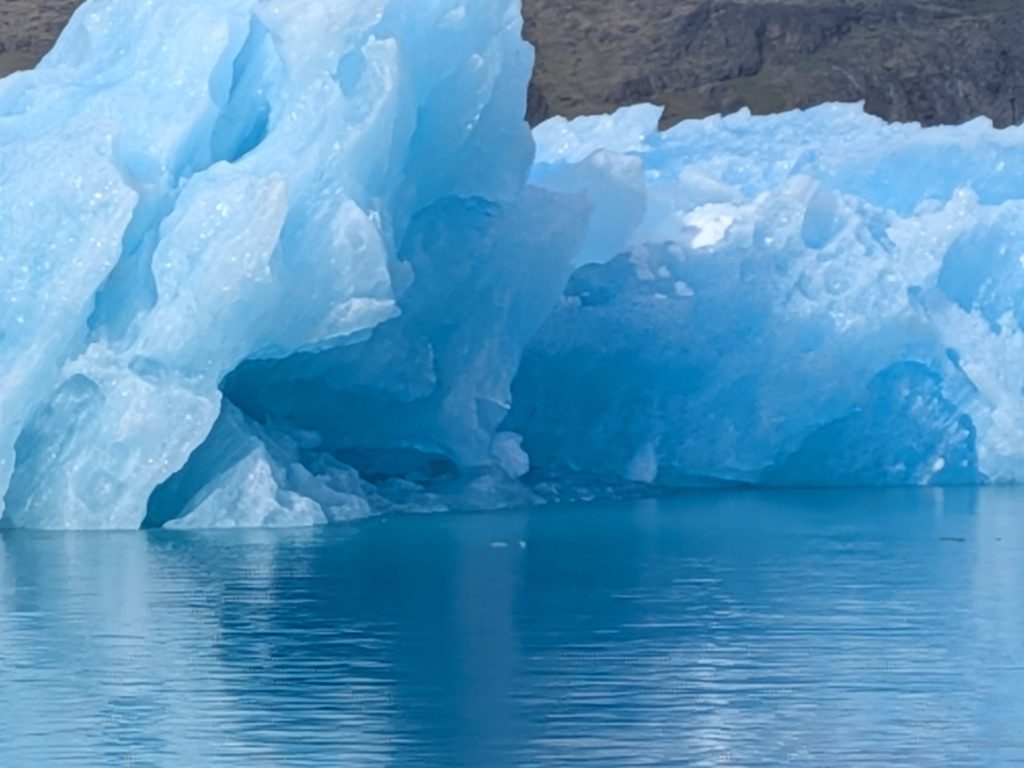
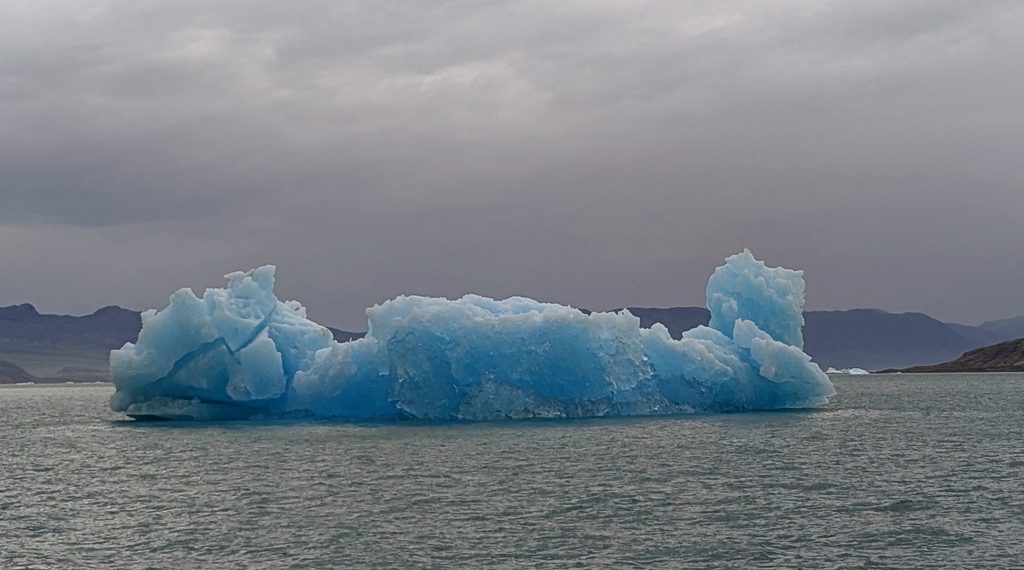
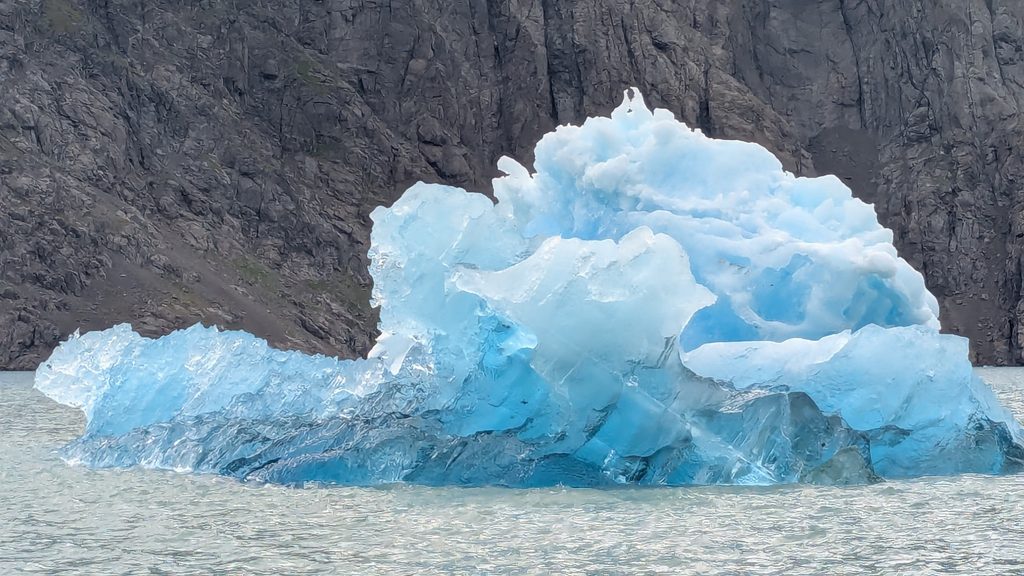
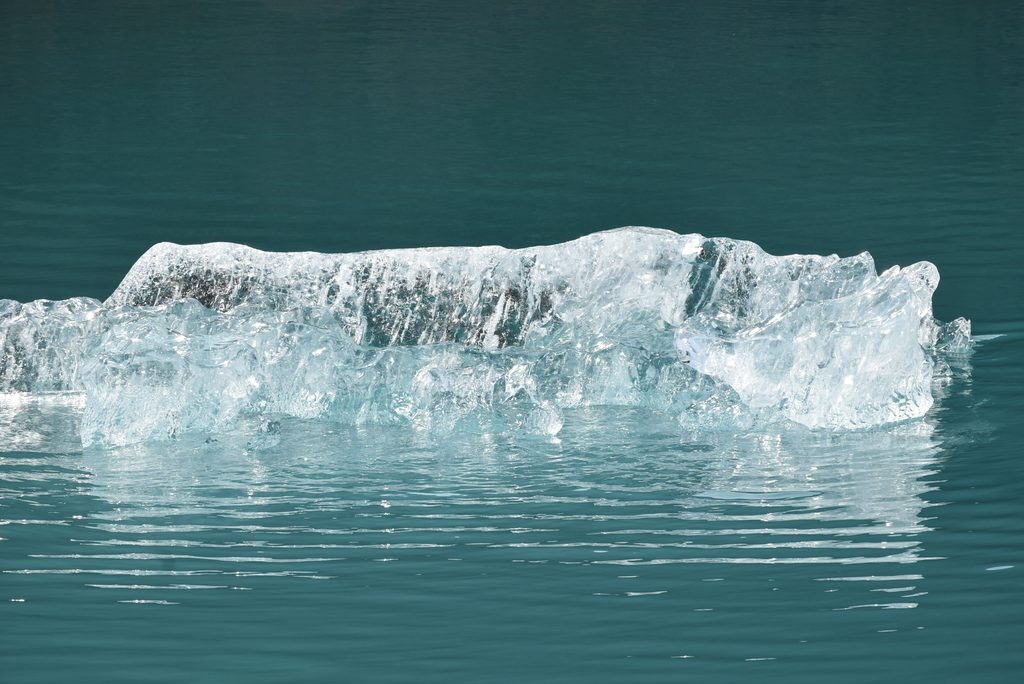
We encountered icebergs with flat tops, jagged ridges, towering monoliths and all sorts of intereesting shapes. Their surfaces were just as diverse, ranging from smooth and polished to heavily weathered and grooved.
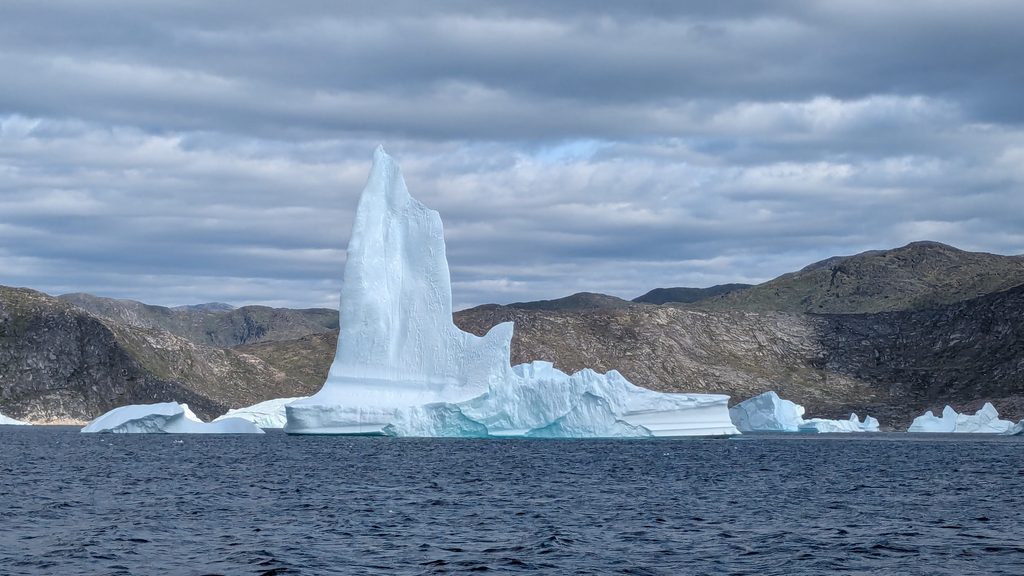
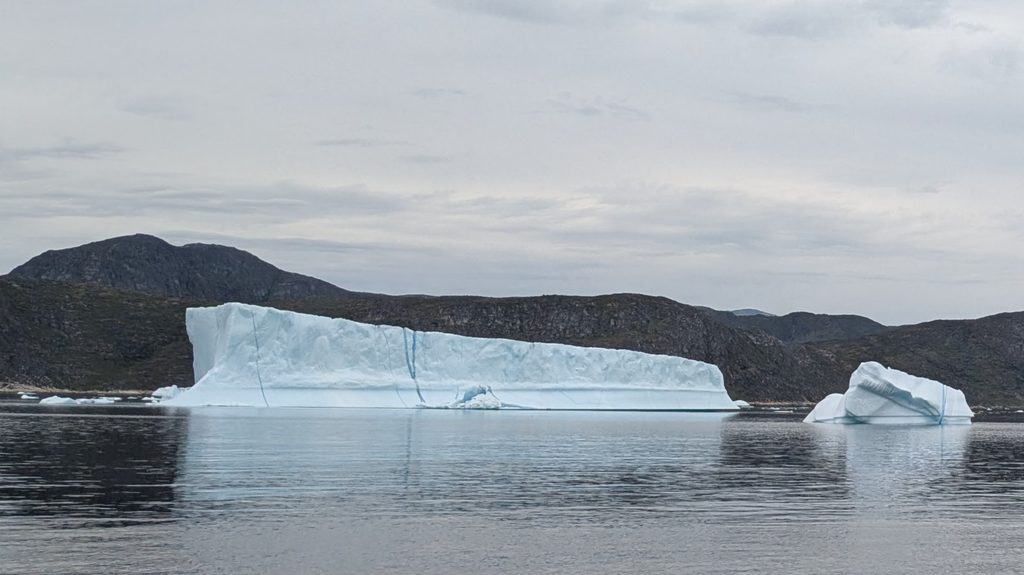
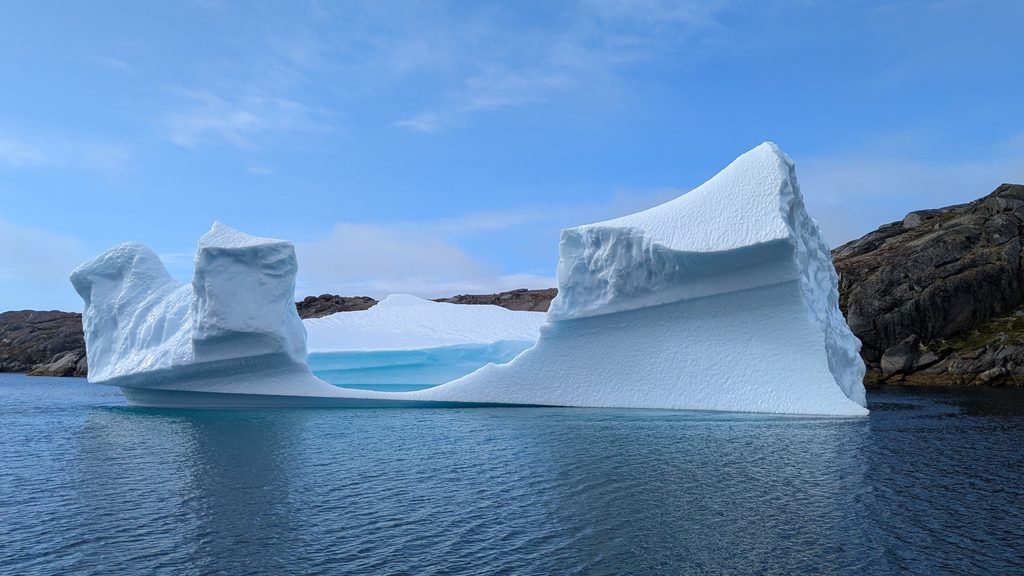
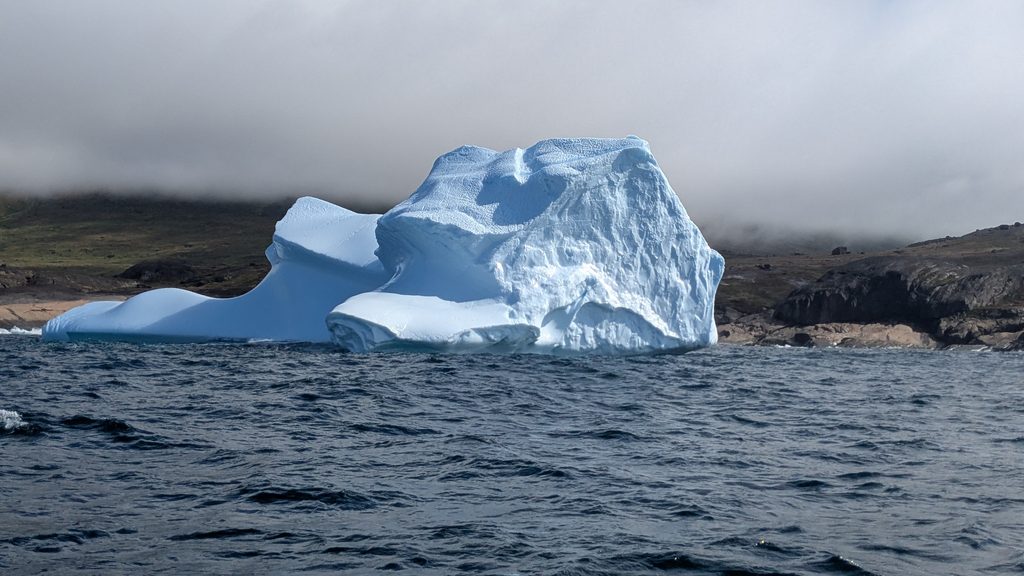
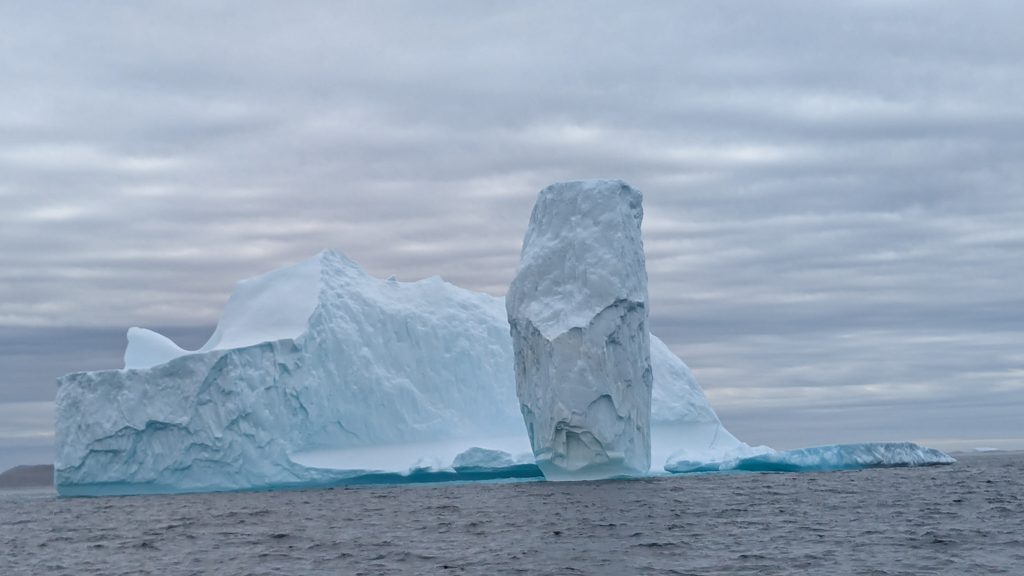
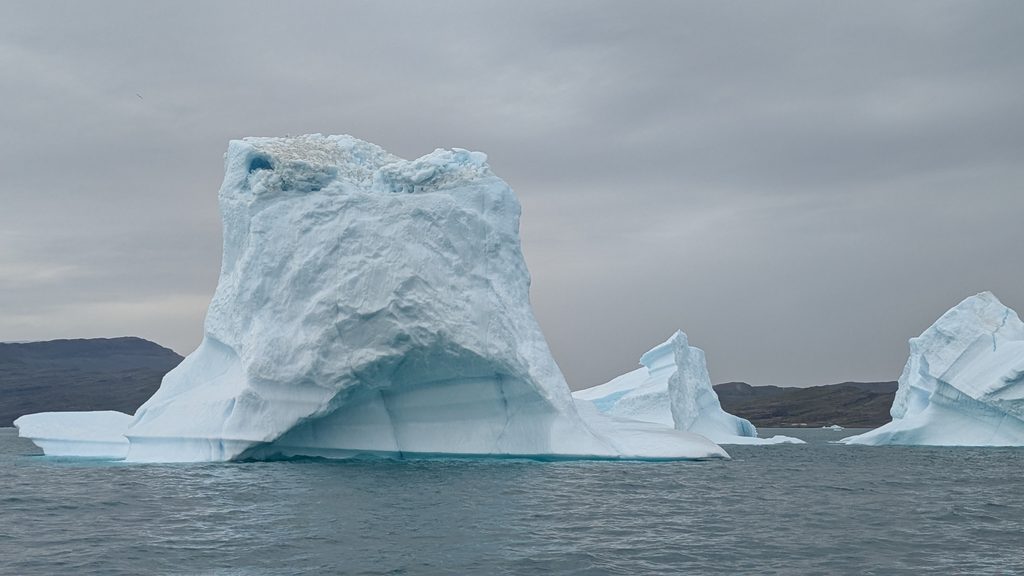
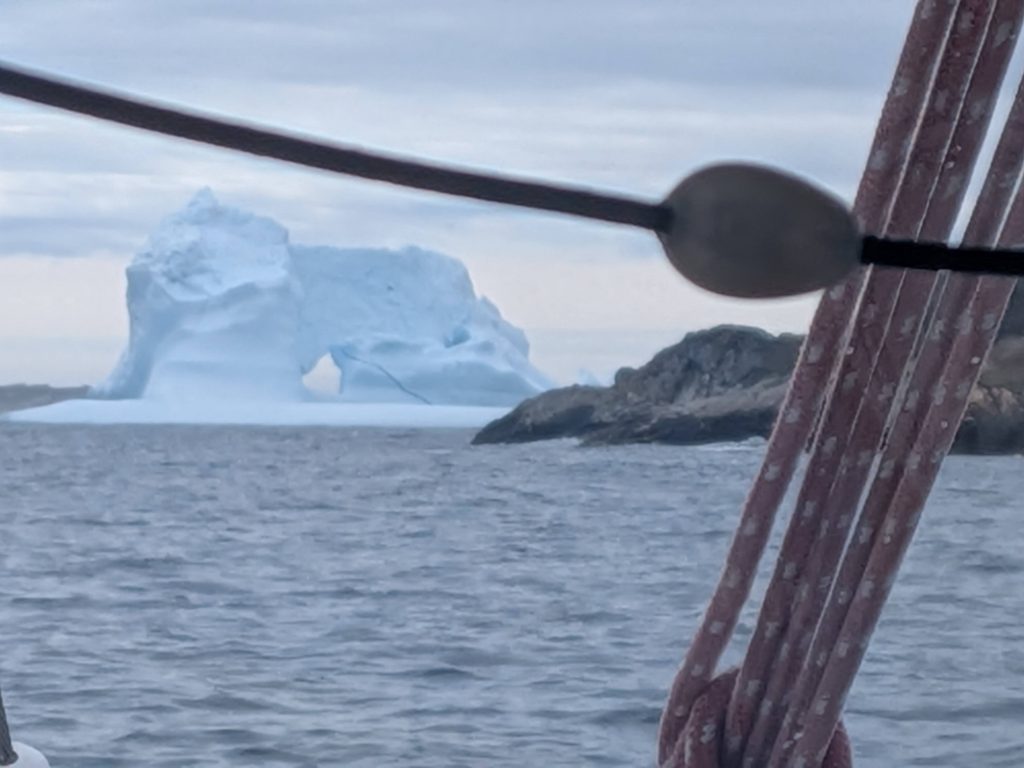
It is well known that only about 10% of an iceberg is visible above the waterline, leaving a colossal, unseen architecture hidden beneath the surface. Consequently, we always gave them a wide berth when passing, determined not to share the Titanic’s fate.

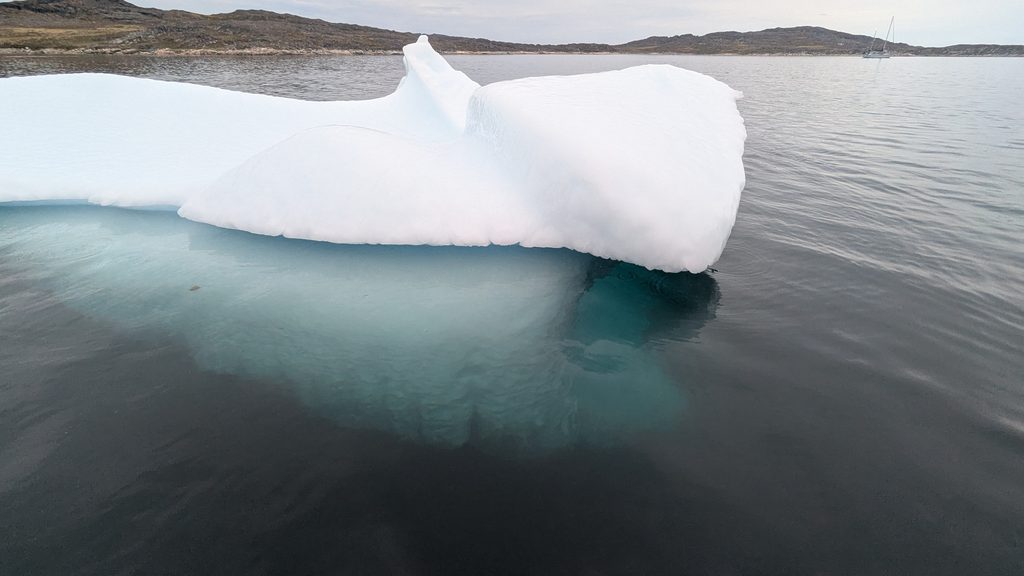
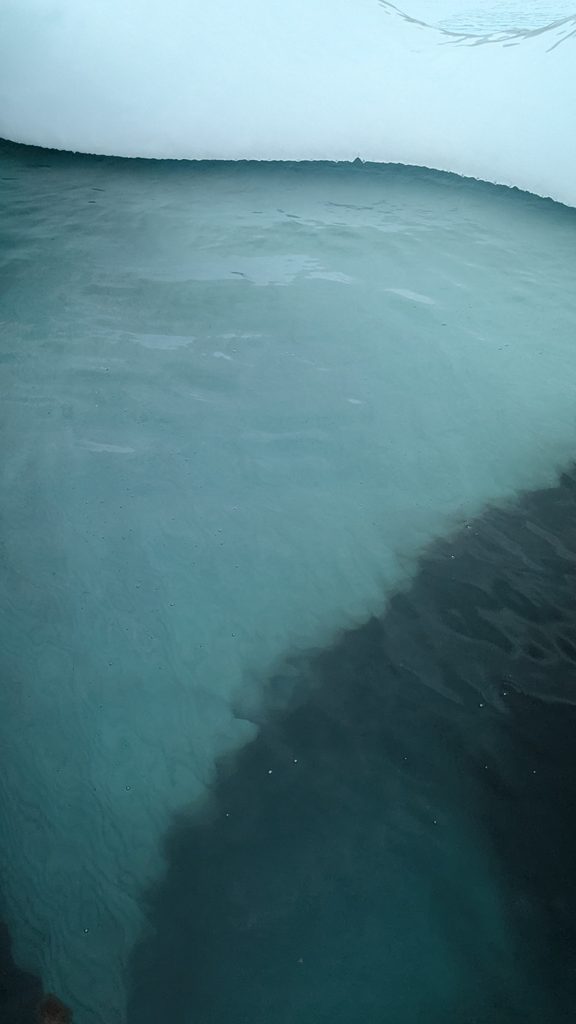
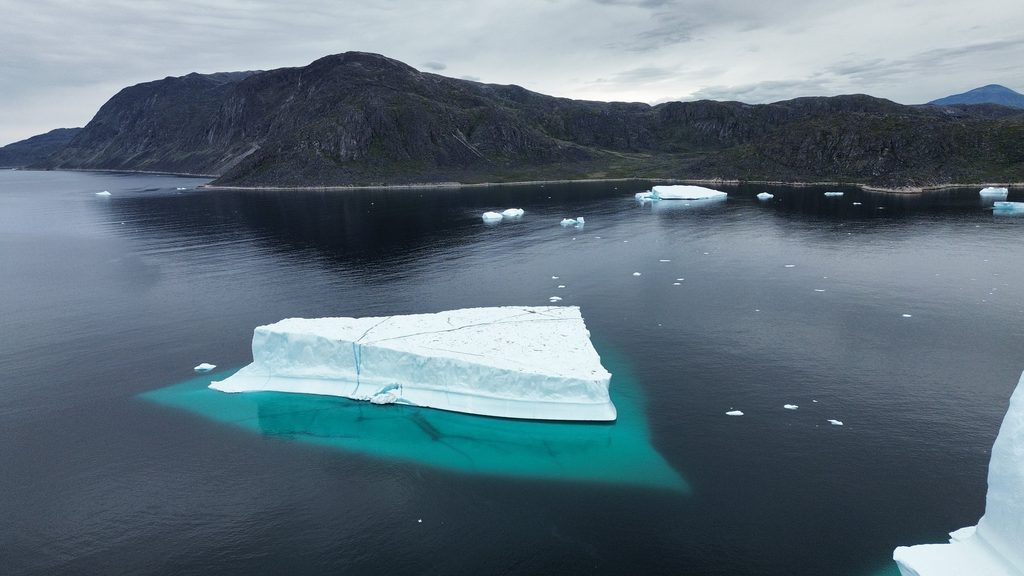
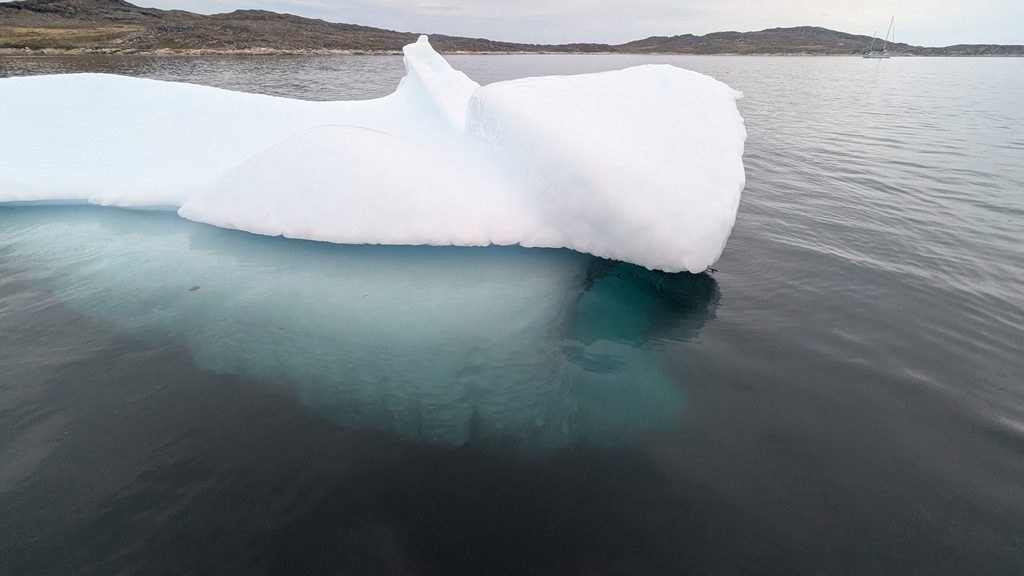
While watching these majestic icy structures was undeniably captivating, we were acutely aware of the hidden dangers they posed when selecting our overnight anchorage. Shifting winds and changing tides can easily drive drifting icebergs into a previously clear bay where they could tangle in our anchor chain, dislodge the anchor and take us on an unintended journey. In the worst-case scenario, an iceberg could trap us by blocking the anchorage entrance entirely, preventing our departure the following morning.
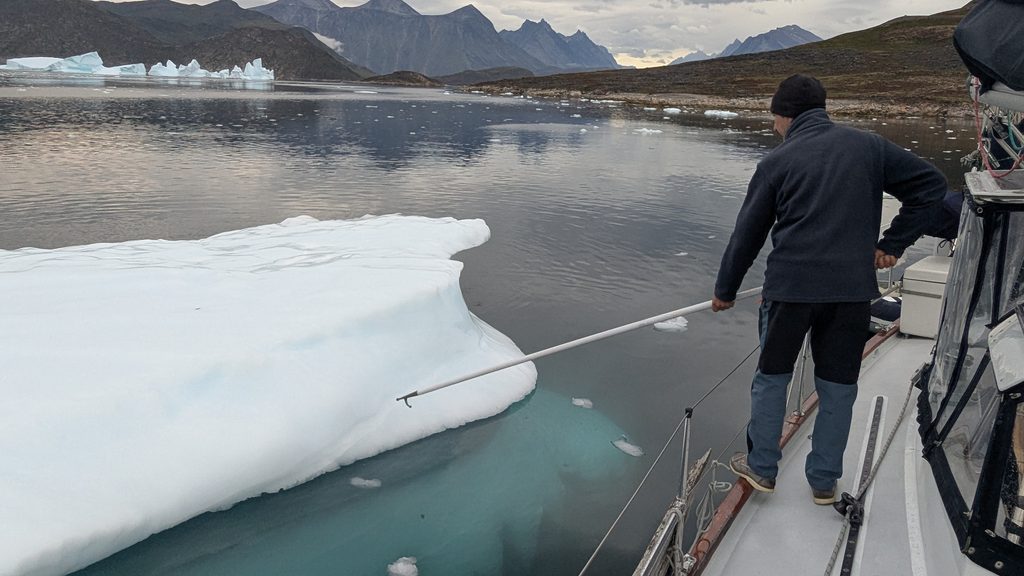
On two separate occasions, we encountered uncomfortably close run-ins with ice. Once, while moored to an L-shaped concrete dock, a sizable chunk of ice drifted slowly toward us. Instead of passing harmlessly by, the current swept it directly into our hull. Fortunately, the block was small enough that we managed to fend it off using our boat hook.
The other time had felt far more dramatic. When we arrived in the anchorage, tere was some ice floating near the opposite shore, swayed gently by the shifting tidal current.
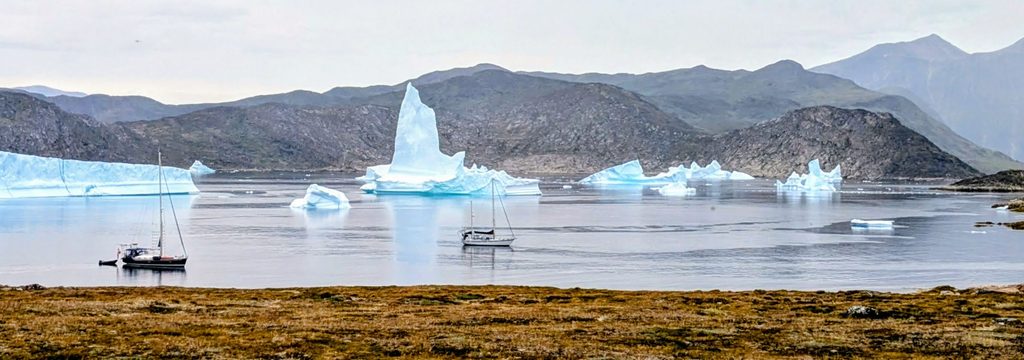
Suddenly, a large bergy bit began to fracture, treating us to the raw spectacle of a calving iceberg as giant blocks of ice fracture, break off and plunge into the sea. We heard the low groans of shifting ice, followed by the deep thunderous rumble of tons of frozen weight hitting the water’s surface. The resulting water displacement was accompanied by a heavy, rushing whoosh and a crashing wave action as pulverized ice and water surged outward. Warily we watched the anchorage become filled with debris – fragments large enough to endanger our hull.
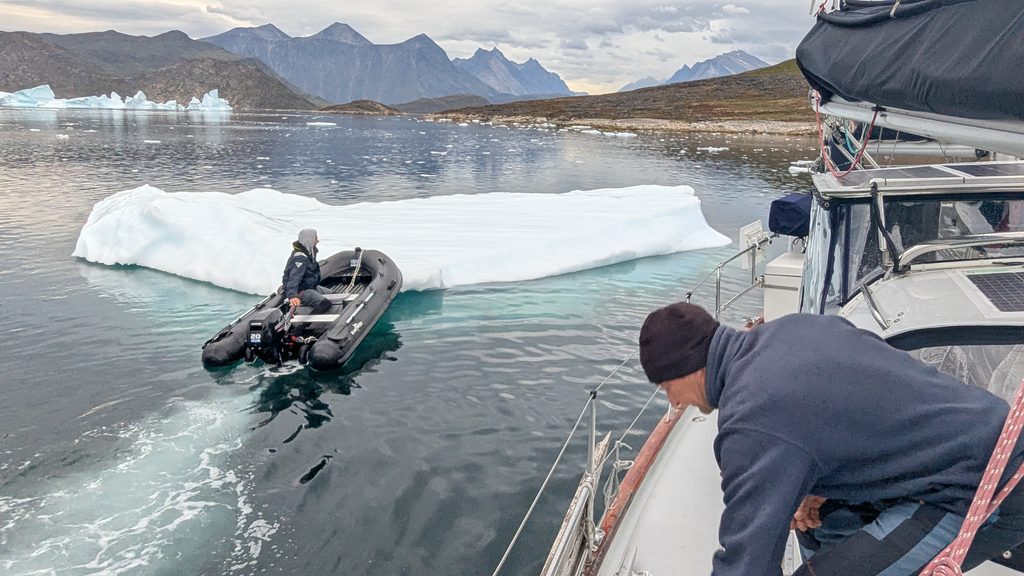
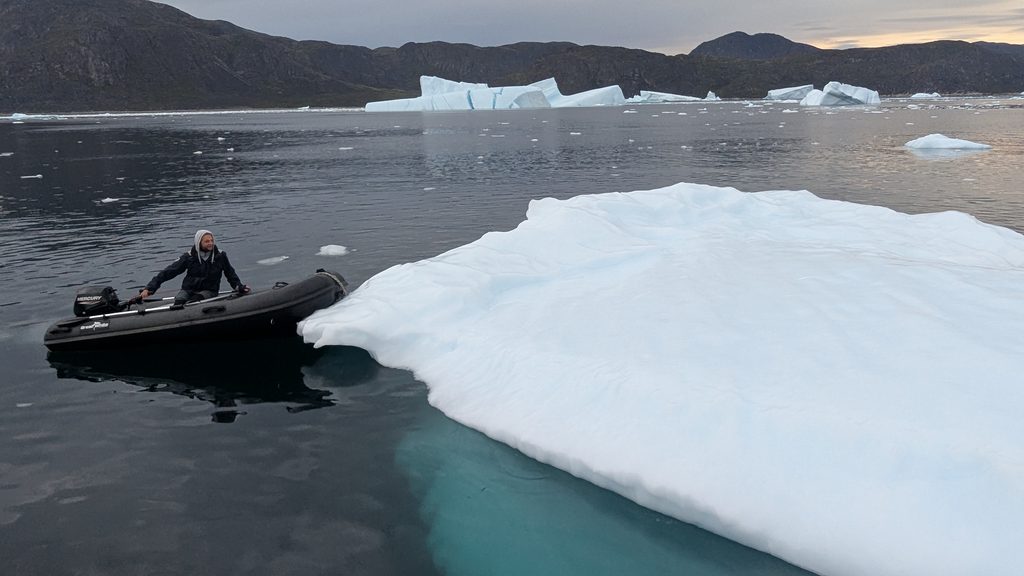
After a few hours, a larger piece drifted directly toward Makaan. We strained to fend it off with the boat hook, but it was too heavy. Fortunately, our neighbor motored over in his dinghy, using his powerful engine to shove the icy bit safely into a corner of the anchorage where it posed no further threat.
However, ice certainly has its appealing qualities as well….

Once again, we were grateful to experience such a spectacular event up close and were deeply impressed by the untamed wilderness and breathtaking beauty of nature.
Leave a Reply