
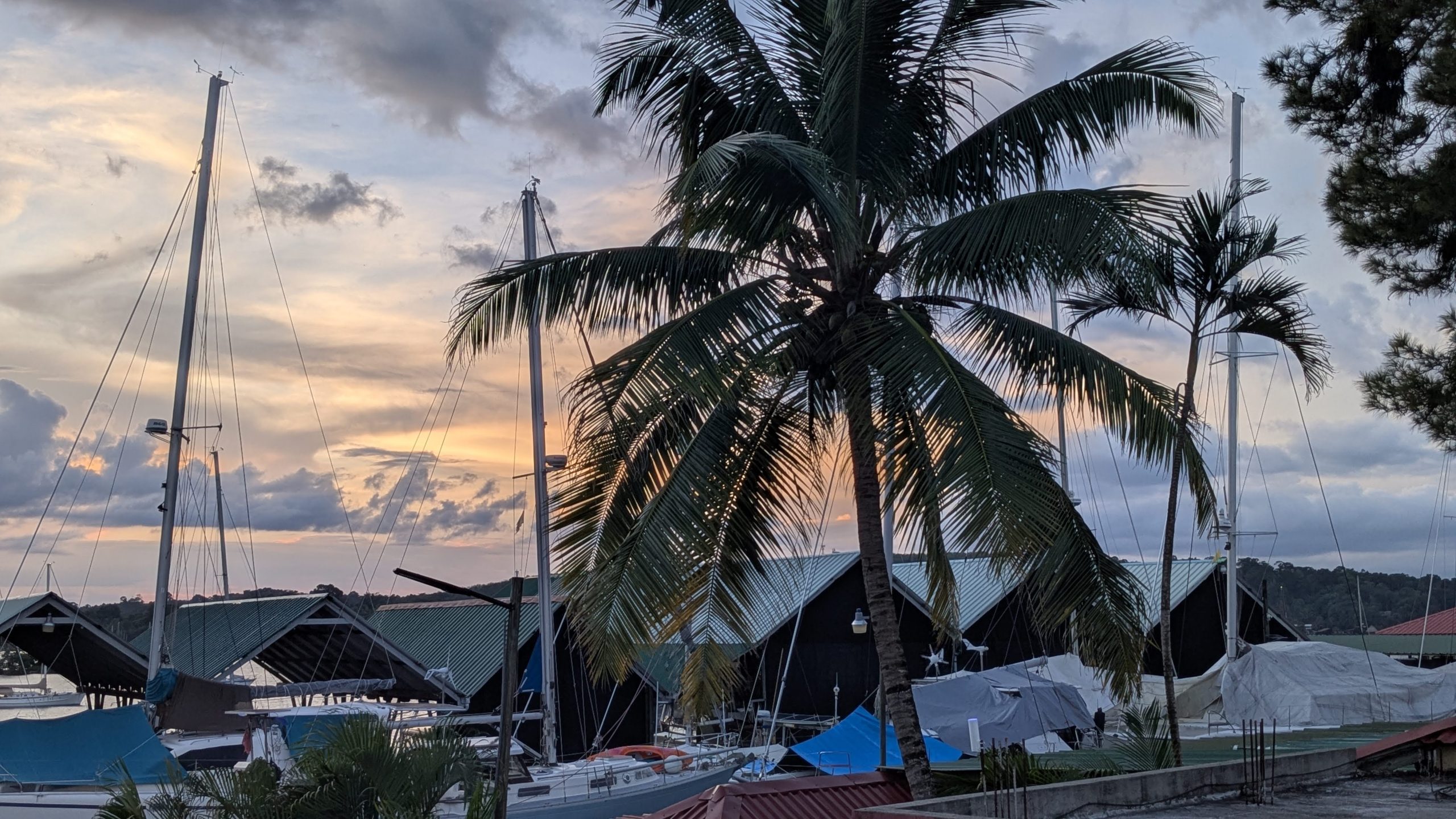
The next leg of our journey begins on August 5 at around noon when we get ready to leave Utila for Rio Dulce, Guatemala. Rio Dulce is a well-known hurricane hole where a lot of cruisers go to wait out the hurricane season and either go back to their home countries or get some boat work done. We fall into the second category of boaters and will be giving MAKAAN some well-deserved care until hurricane season is over.
Die nächste Etappe unserer Reise beginnt am 5. August gegen Mittag, wenn wir uns bereit machen, Utila in Richtung Rio Dulce in Guatemala zu verlassen. Rio Dulce ist ein bekannter Hurrikan-Schutzhafen, wo viele Segler die Hurrikansaison abwarten und dann entweder für eine Weile in ihre Heimatländer zurückkehren oder Arbeiten an ihren Booten durchführen lassen bzw. selbst an den Booten arbeiten. Wir gehören zur zweiten Kategorie von Bootsbesitzern und werden bis Ende der Hurrikansaison in Rio Dulce bleiben und uns um MAKAAN kümmern.


During the journey, we experience predominantly east-northeasterly and east-southeasterly winds, with speeds ranging from 8 to 14 knots. We deploy the Genoa and pole out the main sail, but once again encounter resistance from the current, limiting our speed to approximately 3 knots ! Ultimately, the wind conditions prove to be superior to the initial forecast. The anticipated lull does not happen; on the contrary, the wind strengthens to about 20 knots, and our speed increases to up to 6 knots.mostly winds from east-northeast to east-southeast direction, mostly blowing between 8 to 14 knots.
Während der Reise haben wir überwiegend Ost-Nordost- und Ost-Südost-Winde mit Geschwindigkeiten zwischen 8 und 14 Knoten. Wir setzen die Genua und strecken das Großsegel aus, stoßen jedoch erneut of Gegenströmung, wodurch unsere Geschwindigkeit auf ca. 3 Knoten beschränkt wird. Letztendlich erweisen sich die Windverhältnisse als besser als ursprünglich vorhergesagt. Die erwartete Flaute bleibt aus, im Gegenteil: Der Wind frischt auf etwa 20 Knoten auf und unseren Geschwindigkeit erhöht sich auf bis zu 6 Knoten.
The night sky is simply stunning. We have a clear view of both Venus and Jupiter; however, capturing this scene with our camera equipment prove to be unfeasible.
Der Nachthimmel ist einfach atemberaubend, Wir haben eine klaren Blick auf Venus und Jupiter, aber leider können wir die Szene mit unserer Kamera nicht einfangen.

On August 6 at 7:30 pm we arrive in Tres Puntas, Guatemala. While sometimes quite rolly, it was overall a pleasant 110 nm sail with an average speed of 3.6 knots, topping at 8.9 knots.
Am 6. August um 19:30 Uhr erreichen wir Tres Puntas, Guatemala. Obwohl es manchmal ziemlich wellig war, war es insgesamt eine angenehme 110-Seemeilen-Segelfahrt mit einer Durchschnitssgeschwindigkeit von 3,6 Knoten und einer Höchstgeschwindigkeit von 8,9 Knoten.

After a restful night’s sleep, we turn on the engine to move closer to Livingston, our port of entry. Suddenly we hear strange noises when moving the steering wheel. After taking a closer look, we notice that the steering cable that transfers the motion from the steering wheel to the rudder was showing serious signs of wear, and it had come loose from its wheels. It was literally hanging on one thread. The best we can do right now is to put the cable back on the wheel. We’re hoping that it’ll hold until we find a rigger who can help us fix it.
Nach einer erholsamen Nacht starten wir den Motor, um uns Livingston, unserem Einreisehafen, zu nähern. Plötzlich hören wir seltsame Geräusche, wenn wir das Steuerrad bewegen. Bei näherer Betrachtung stellen wir fest, daß das Steuerkabel, das die Bewegung vom Steuerrad auf das Ruder überträgt, starke Verschleißerscheinungen aufweist und sich von seinen Rädern gelöst hat. Es hängt buchstäblich an einem Faden! Das Beste, was wir im Moment tun können, ist, das Kabel wieder am Rad zu befestigen. Wir hoffen, daß es hält, bis wir einen Rigger finden, der uns bei der Reparatur helfen kann.

But first we have to navigate the wide sandbar at the mouth of the Rio Dulce. Boats with a draft over five feet must definitely enter at high tide and we had planned our arrival accordingly. We had heard from friends whose boat draws 6 feet that they made it over the bar but touched bottom multiple times and ended up plowing through the soft, muddy bottom. With our draft of 6’9″, we would definitely get stuck! For cases like ours, it is recommended to contact a local who can tip the boat and help you over the sandbar.
Zunächst müssen wir jedoch die breite Sandbank an der Mündung des Rio Dulce passieren. Boote mit einem Tiefgang von mehr als fünf Fuß müssen auf jeden Fall bei Flut einlaufen und wir haben unsere Ankunft entsprechend geplant. Wir hatten von Freunden, die ein Boot mit 1,80 m Tiefgang haben, gehört, daß sie es über die Sandbank geschafft hatten, aber dabei mehrmals den Grund berührten und dann ungeniert durch den weichen, schlammigen Grund pflügten. Mit unserem Tiefgang von 2,05 m würden wir definitiv stecken bleiben! In Fällen wie unserem ist es nötig, einen Einheimischen zu kontaktieren, der das Boot kippen und somit über die Sandbank helfen kann.
With butterflies in our stomachs – will the rudder cable hold? – we approach the entrance buoy, where we meet Hector. In preparation of his services, we had already tied a long line to the top of our main mast. He attaches one of his own lines to ours, which is then tied to his boat. Hector drives parallel to our boat at a distance that caused us to heel enough to float over the sandbar. We still touch bottom a couple of times and signal Hector to tip us a little further still.
Mit Schmetterlingen im Bauch – wird das Ruderkabel halten? – nähern wir uns der Eingangsboje, wo wir Hector treffen. In Vorbereitungen auf seine Hilfe hatten wir eine lange Leine an der Spitze unseres Mastes befestigt. Hector befestigt eine seiner Leinen an unserer, die dann an seinem Boot festgebunden wird. Er fährt dann parallel zu unserem Boot in einer Entfernung, die uns so weit zum Krängen bringt, daß wir über die Sandbank schwimmen. Wir berühren trotzdem die Sandbank ein paar Mal und signalisieren Hector, uns noch ein wenig weiter zu kippen.


It doesn’t take long though before we drop our anchor in front of Livingston. We pay Hector $75 for a job well done. So far, so good. Then we call Raul, our immigration agent, and he arrives with several officials from immigration, customs and the port authority. We had already sent Raul all of our documents ahead of time, so the immigration process is smooth. The last step is to go ashore, get Quetzales (the Guatemalan currency) from the bank and stop by Raul’s office to pay the official fees and pay him for his services (a total of $250), and pick up our passports.
Es dauert jedoch nicht lange, bis wir vor Livingston vor Anker gehen. Wir bezahlen Hector 75 Dollar für seine Arbeit. So weit, so gut. Dann rufen wir Raul, unseren Einwanderungsagenten, an, und er kommt mit mehreren Beamten der Einwanderungsbehörde, des Zolls und der Hafenbehörde Wir hatten Raul bereits in Voraus alle unsere Dokumente geschickt, sodass die Einreiseformalitäten reibungslos verlaufen. Der letzte Schritt besteht darin, an Land zu gehen, Quetzales (die guatemaltekische Währung) von der Bank zu holen und bei Rauls Büro vorbeizuschauen. Dort bezahlen wir die offiziellen Gebühren, seine Agentenvergütung (zusammen 250 Dollar) und unsere Pässe abzuholen.


As we walk through the crowded streets of Livingston, we get our first impression of the local Garifuna culture.
Während wir durch die überfüllten Straßen von Livingston schlendern, bekommen wir einen ersten Eindruck von der lokalen Garifuna-Kultur.


According to reviews on Noforeignland and Navionics, it is not recommended to spend the night in Livingston. Instead, it is suggested to look for one of the beautiful anchorages in the Rio Dulce. So, we motor miles up the river. For the last six miles or so, the river enters an impressive gorge with vertical limestone cliffs that rise up to 300 feet high and are covered with tangled vegetation. The river then opens up into Lake El Golfete, where we drop anchor at Cayo Quemodo.
Laut Bewertungen auf Noforeignland und Navionics ist es nicht empfehlenswert, in Livingston zu übernachten. Stattdessen wird empfohlen, einen der schönen Ankerplätze im Rio Dulce aufzusuchen. Also fahren wir unter Motor den Fluss hinauf. Auf den letzten sechs Meilen mündet der Fluss in eine beeindruckende Schlucht mit senkrechten Kalksteinfelsen, die bis zu 300 Fuß hoch sind und mit dichter Vegetation bewachsen sind. Der Fluss mündet dann in den See El Golfete, wo wir bei Cayo Quemodo vor Anker gehen.
We’re relieved that our rudder cable held up! Now it’s time to go swimming! It’s been years since we last swam in fresh water, and it feels great.
Wir sind erleichtert, dass unser Ruderkabel gehalten hat! Jetzt ist es Zeit zum Schwimmen! Es ist Jahre her, seit wir das letzte Mal in Süßwasser geschwommen sind, und es fühlt sich großartig an.

The next morning, when we were doing the dishes, we noticed that the galley sink had stopped draining. We had suspected for a while that the hose might be clogged, but we found out that the culprit was actually the pump that pumps the water out of the sink. I don’t know if I’ve mentioned the large quantity of spare parts we carry on MAKAAN. In such a situation, though, it’s great to be able to go shopping in one of the storage cabinets for the necessary spare part—in this case, a joker valve. Good record keeping helps, too, because who can remember where all the spare parts are located?
Als wir am nächsten Morgen das Geschirr spülten, stellten wir fest, dass das Spülbecken in der Kombüse nicht mehr ablief. Wir hatten schon eine Weile vermutet, dass der Schlauch verstopft sein könnte, aber wir fanden heraus, dass der eigentliche Übeltäter die Pumpe war, die das Wasser aus dem Spülbecken pumpt. Ich weiß nicht, ob ich schon erwähnt habe, dass wir auf der MAKAAN eine Unmenge an Ersatzteilen mitführen. In einer solchen Situation ist es jedoch großartig, wenn man in einem der Staukästen “einkaufen” gehen kann – in diesem Fall ein Jokerventil. Eine gute Dokumentation ist ebenfalls hilfreich, denn wer kann sich schon merken, wo sich alle Ersatzteile befinden?

Here’s a small selection of our spare parts
Unfortunately, the rigger who has a shop close by does not have a stainless steel cable with the right diameter. So Hans is using one of our old lifelines, which we replaced in Trinidad, to replace the broken steering cable, using however a different mounting method than the original. But we are confident that it will do its job until we can implement a more permanent solution.
Leider hat der Rigger, der einen Shop in der Nähe hat, kein Edelstahlseil mit dem richtigen Durchmesser. Deshalb verwendet Hans eine Stück unserer alten Reling, das wir in Trinidad ersetzt haben, um das defekte Steuerkabel zu ersetzen, wobei er allerdings eine andere Befestigungsmethode als ursprünglich verwendet. Wir sind jedoch zuversichtlich, dass es seinen Zweck erfüllen wird, bis wir eine dauerhaftere Lösung finden können.

We spend a couple days at this idyllic anchorage, enjoying every last second before moving on to the RAM Marina in Rio Dulce. We knew that a lot of work was waiting for us there.
Wir verbringen ein paar Tage an diesem idyllischen Ankerplatz und geniessen jede einzelne Sekunde, bevor wir zur RAM Marina in Rio Dulce weiterfahren, denn wir wissen, dass dort eine Menge Arbeit auf uns wartet.


Schreibe einen Kommentar