
The day we’ve been planning and waiting for has finally arrived—we are setting sail for Greenland! Anticipation is mixed with a healthy dose of nervousness. Not only is this our longest passage to date, but we also face cold temperatures, thick fog, erratic winds, , and, toward the end of the journey, the threat of ice. It isn’t the massive bergs that worry us most, as our radar will easily spot those on the screen. The real danger comes from the smaller chunks known as “growlers”—ice the size of a small boat, standing up to 3 feet high and 15 feet wide. These treacherous fragments evade radar detection and, wrapped in thick fog and churned up by high waves, will be nearly impossible to spot in time.
Having Claus and Kathrin from Flinthoern traveling alongside us provided a welcome sense of security. As we slipped our lines and motored out of the harbor, we hoisted our sails and engaged the electric autopilot, only to discover it was malfunctioning. Although we attempted to recalibrate the rudder to fix the issue, our efforts were unsuccessful. We faced a critical choice: turn back to St. Anthony or press ahead while the weather window remained favorable, trusting our Monitor windsteering system to minimize the need for manual steering. Ultimately, we decided to push forward.
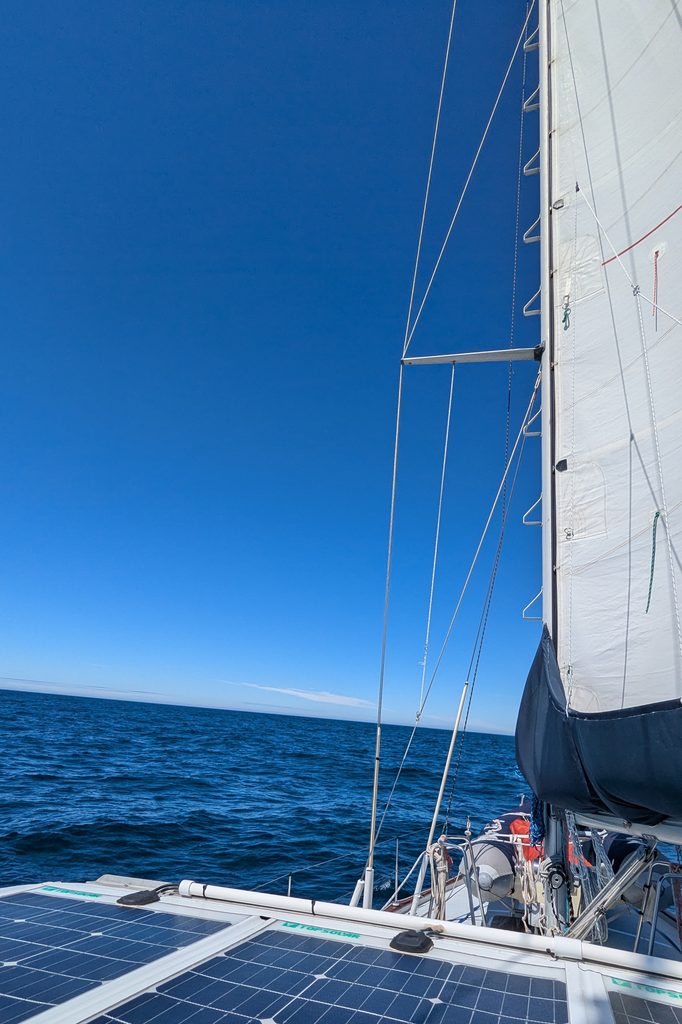
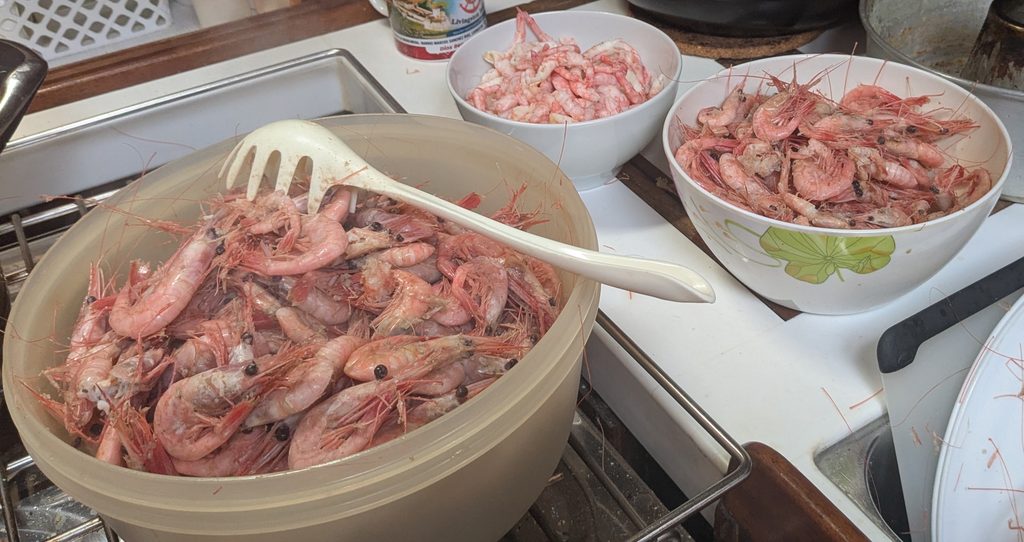
On July 7, at approximately 2:00 PM, we set our course for Greenland. Initially, there was little to no wind, meaning the journey began with manual steering. Hans took the helm while I busied myself cooking and peeling the massive haul of shrimp we got from a local shrimp boat that morning. As winds picked up slightly from the SSW-SW, we attempted to fly the spinnaker, but there wasn’t enough breeze to keep it filled. We quickly reverted to the jib and mainsail, continuing with partial handsteering. Much like any windvane self-steering system, the Monitor struggles to maintain control when running before a very light sternwind, requiring us to intervene and correct the boat’s heading every few minutes.
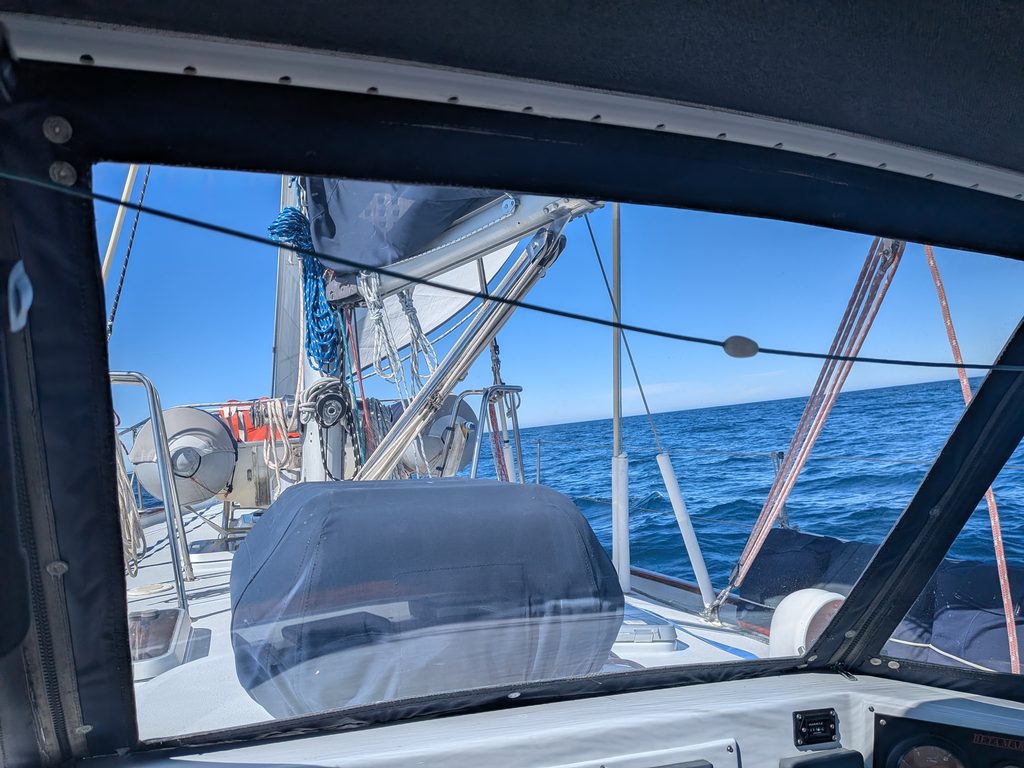
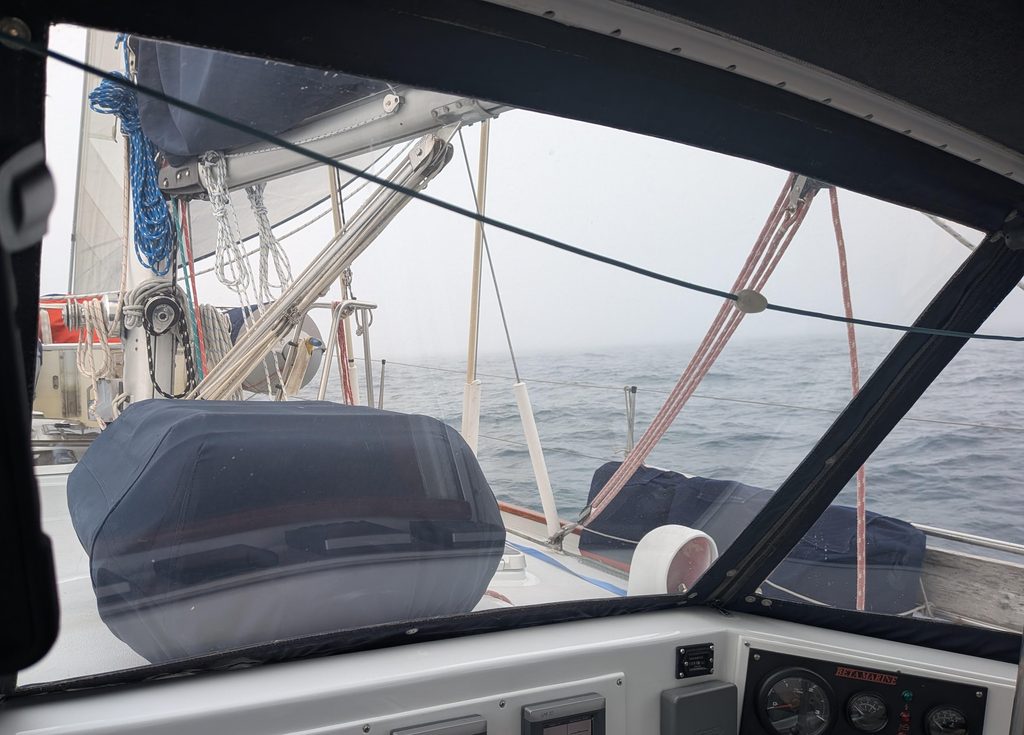
Weather conditions change in an instant. One moment we were bathed in brilliant sunshine beneath a clear blue sky, and just a few minutes later, we were completely swallowed up by a dense fog.
Finally, on Thursday, the wind picked up to a steady 15-25 knots, still blowing from the SW-WSW, bringing the waves up with it. The Monitor worked like a charm, save for a minor hiccup during the rainy night of Friday, July 10. All our previous struggles were instantly forgotten the next day as we were greeted with clear blue skies, brilliant sunshine, and ideal winds for flying the spinnaker. We made great speed, consistently maintaining between 5 and 6 knots.
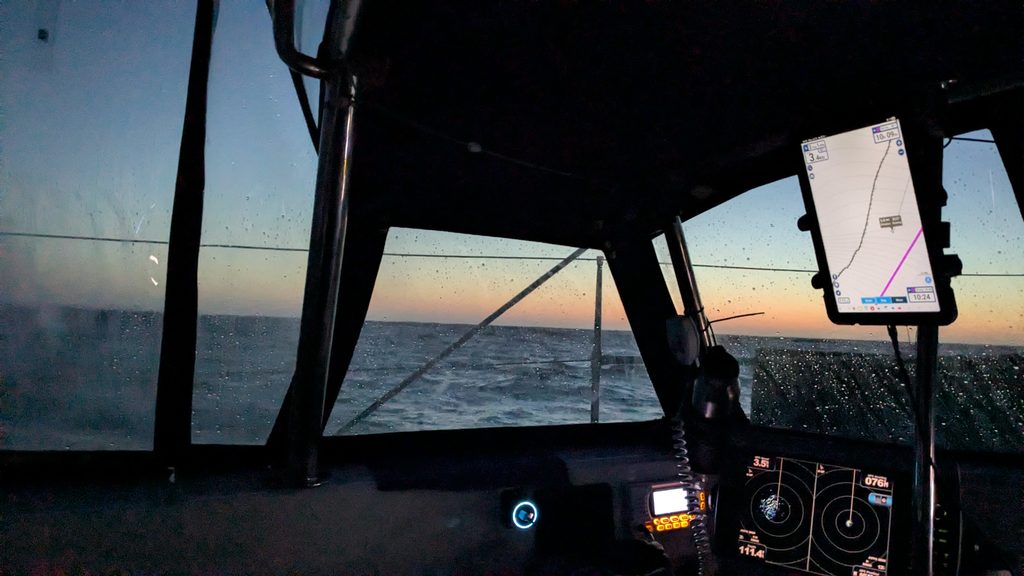
Eventually, the anticipated calm set in, forcing us to restart the engine. Our objective was to maintain an average speed of approximately 4.5 knots, ensuring we reached the icebelt by early Monday morning. This timing would allow us to safely navigate through it in daylight and successfully arrive at our destination, Qaqortoq.
We kept the radar on nearly continuously, even in clear conditions, to hone our ability to identify how ice displays on the screen.
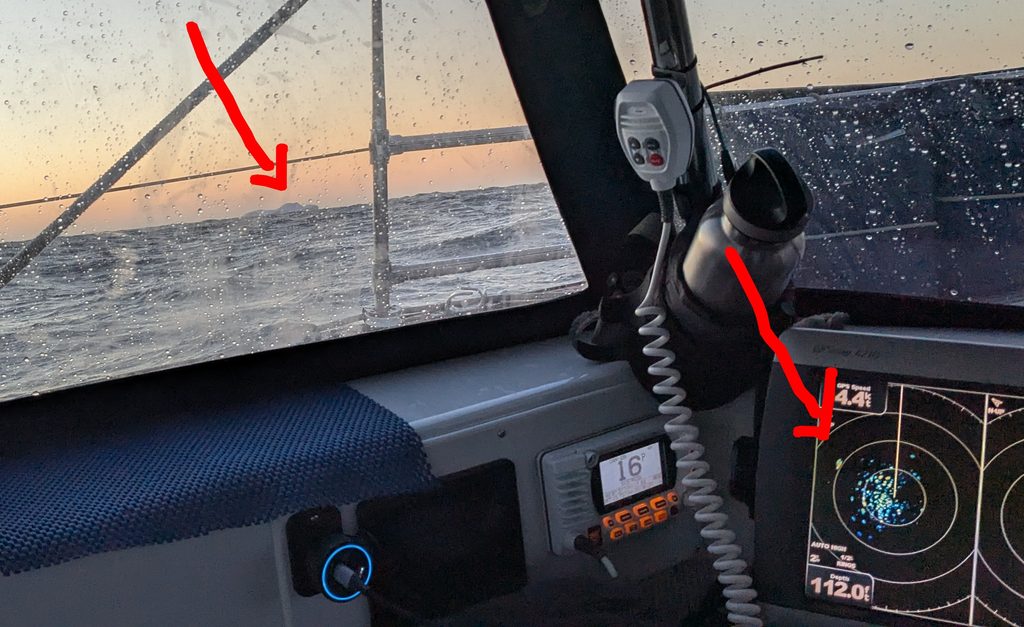
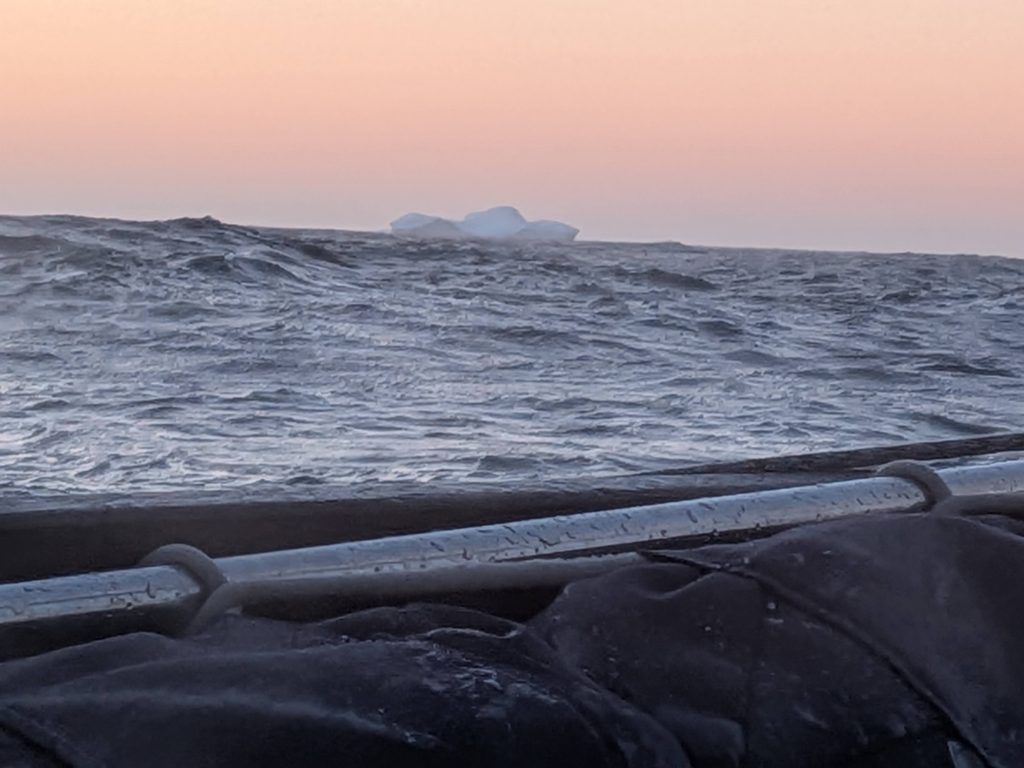
On Sunday, July 12, the wind intensified, sustaining speeds in the mid-twenties with gusts reaching up to 35 knots, accompanied by a sharp build-up of waves. Sailing on a close reach proved to be a an uncomfortable ride, prompting us to put in a reef to smooth things out. Before long, heavy waves began crashing directly over the boat. We eventually added a second reef to reduce our speed, deliberately slowing down to avoid entering the iceberg belt in these conditions. Ultimately, together with the crew of the Flinthoern we decided to heave-to, waiting out the heavy weather until the forecasted calm returned—giving us the visibility needed to spot hidden chunks of ice that the rough seas would otherwise conceal.
On Monday, July 13, we sailed up the fjord toward Qaqortoq, and at around 1:00 PM, we tied up alongside an old fishing vessel. We did it! We completed our 719-nautical-mile journey across the Labrador Sea from Newfoundland to Greenland.
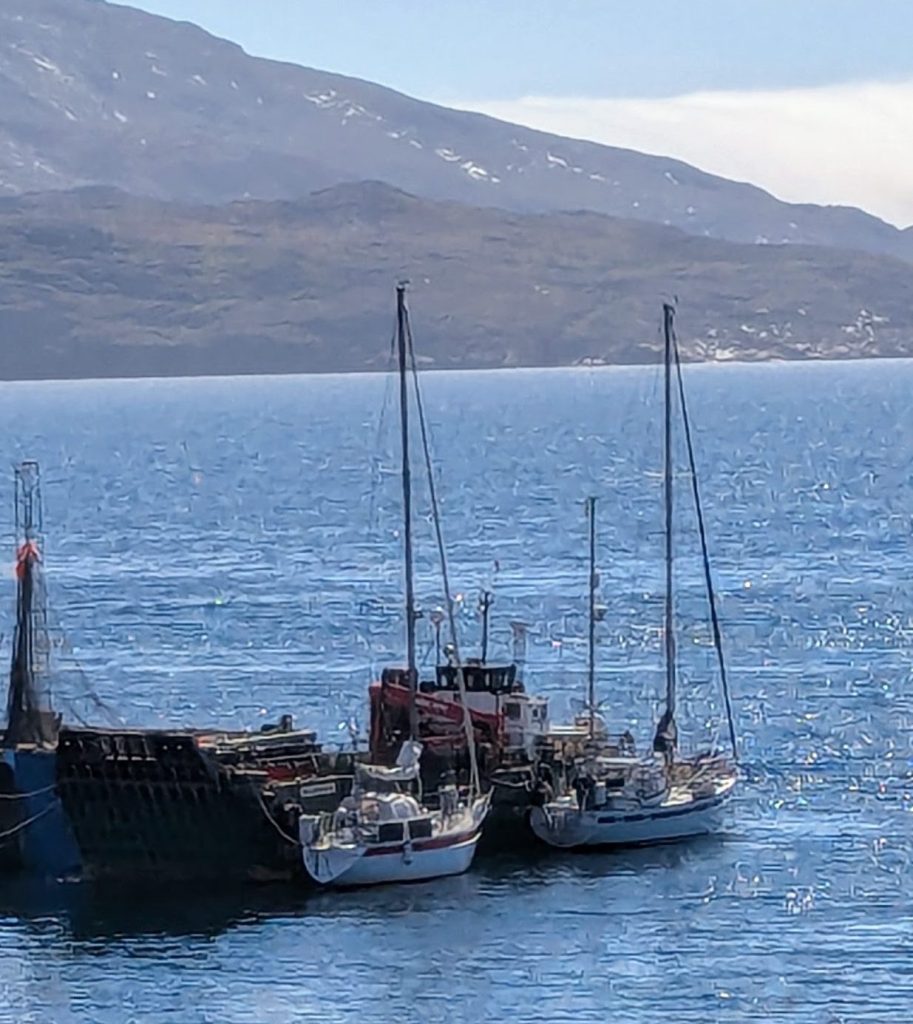
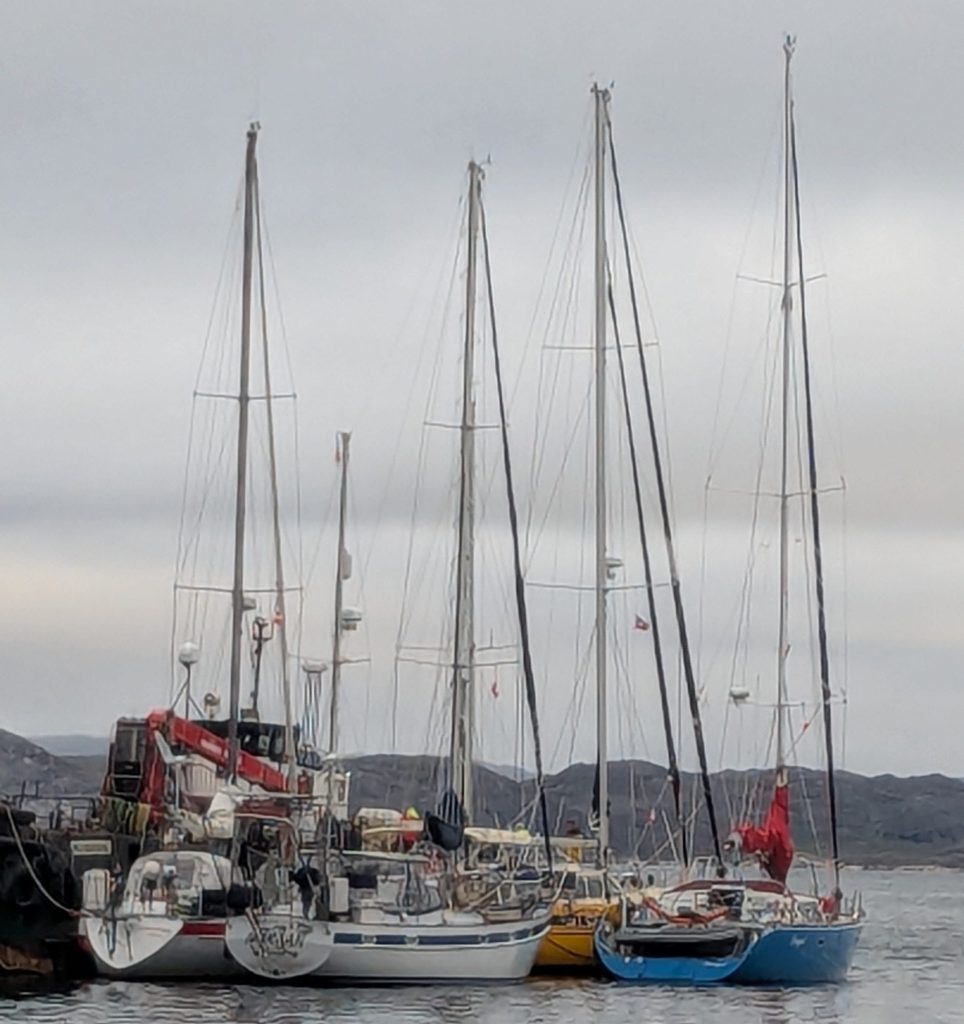
The next day two more boats joined us, and we therefore rafted up to Flinthoern, as we were planning to leave before the other two boats.
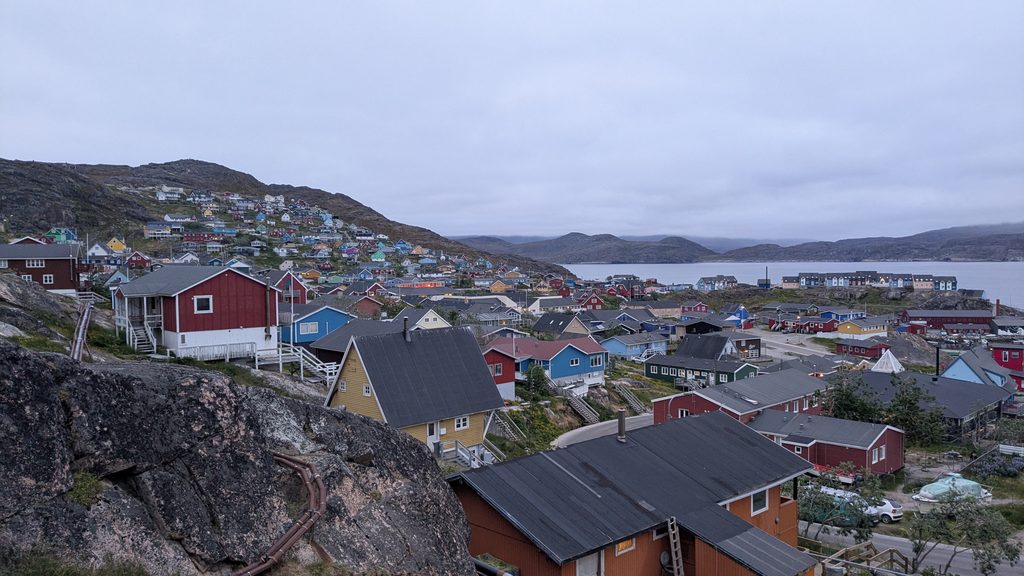
Once we secured the boat, we went ashore to clear customs at the Qaqortoq police station, a remarkably straightforward process using our German passports. Afterward, we took a leisurely stroll to experience our first Greenlandic town. The vibrant, colorful houses radiated a cheerful charm, and we were pleasantly surprised by the wealth of wildflowers blooming throughout the settlement. In stark contrast, the rugged mountains encircling the town appeared stark and largely devoid of vegetation from a distance.

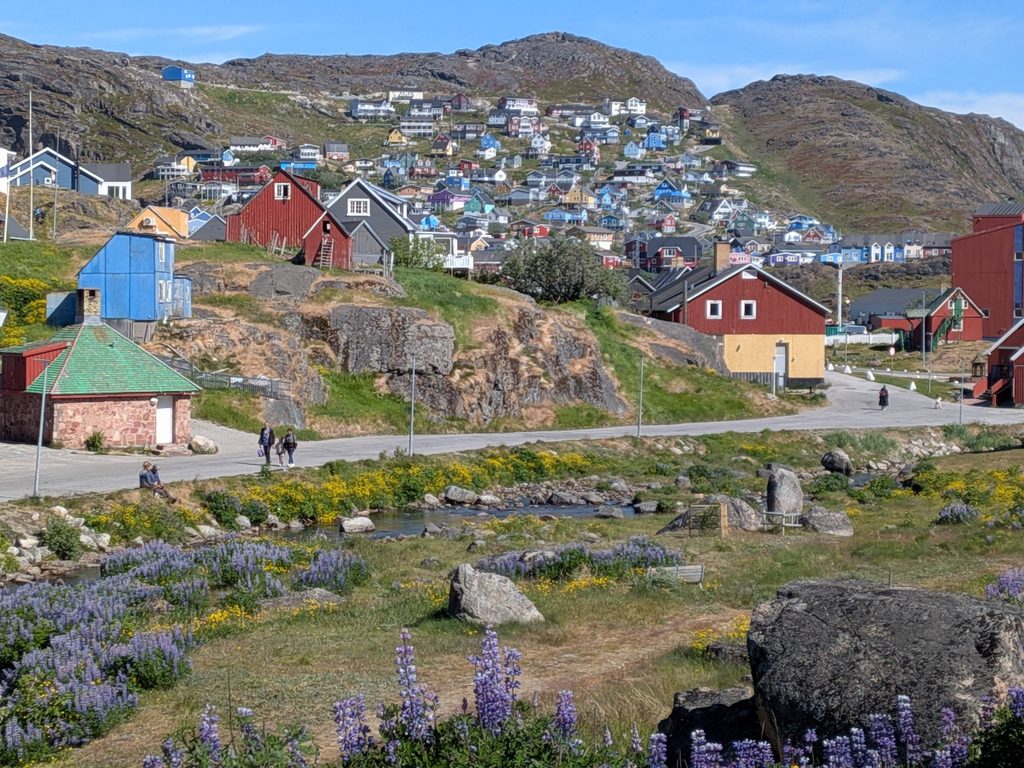

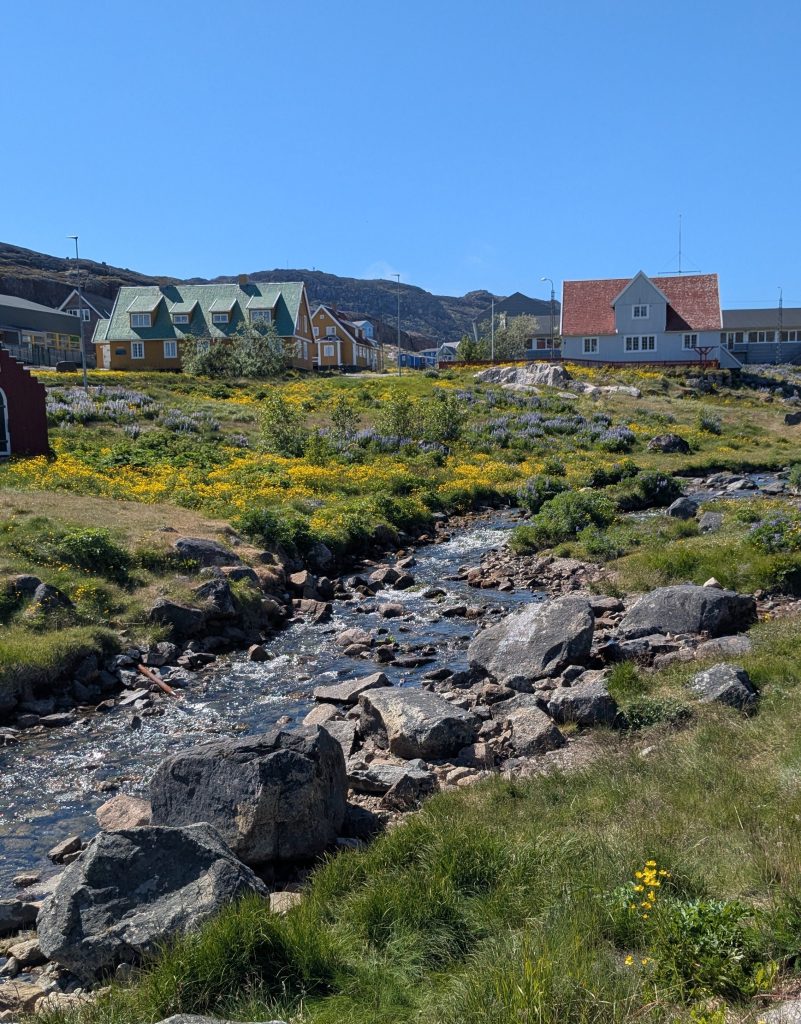
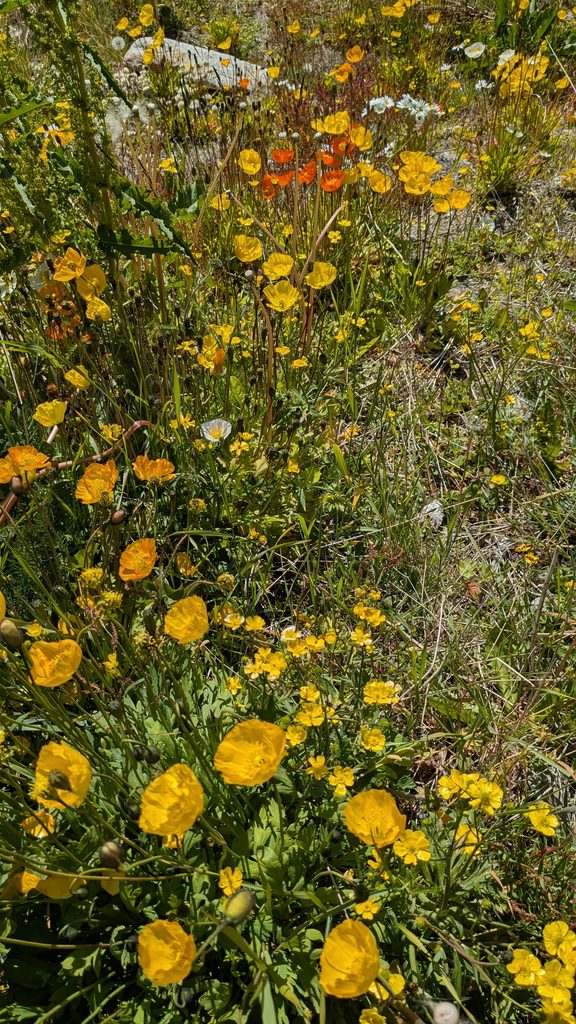
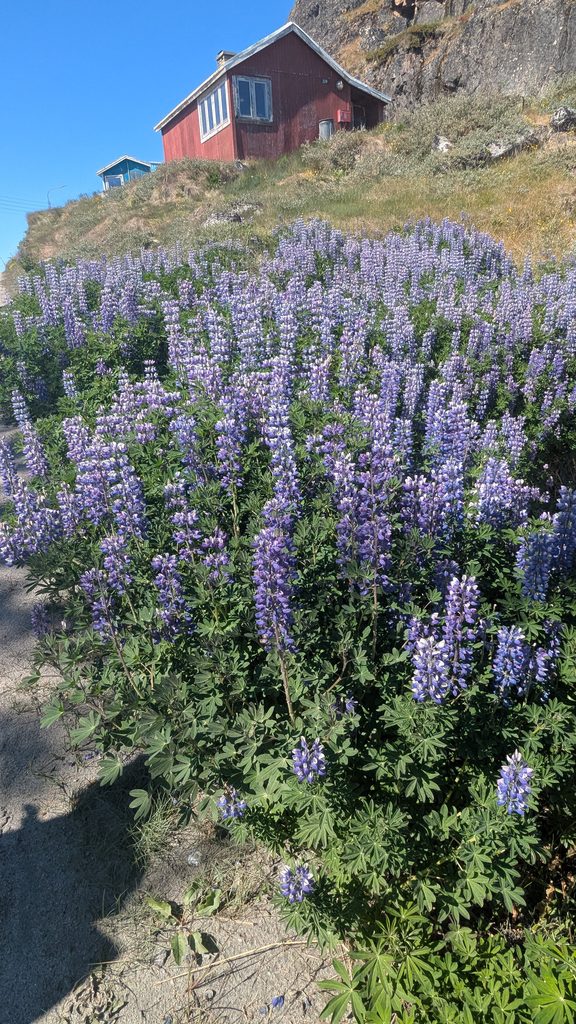
Taking advantage of a dry, clear evening, we set off around 9 p.m. to hike up one of the surrounding mountains, which revealed a surprisingly lush low-Arctic tundra landscape, blanketed in moss, lichen, juniper, woody shrubs, and delicate, low-growing wildflowers.
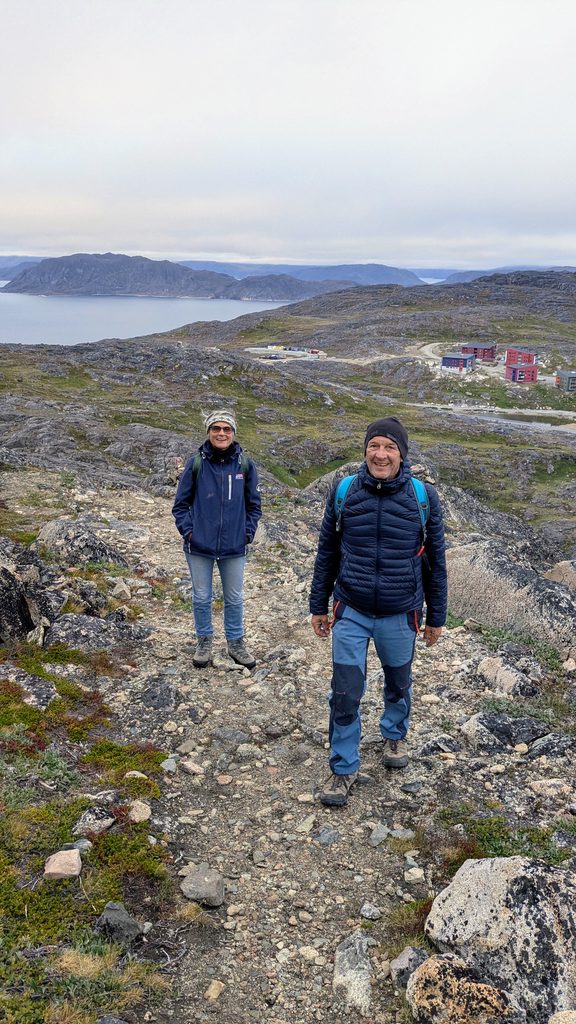

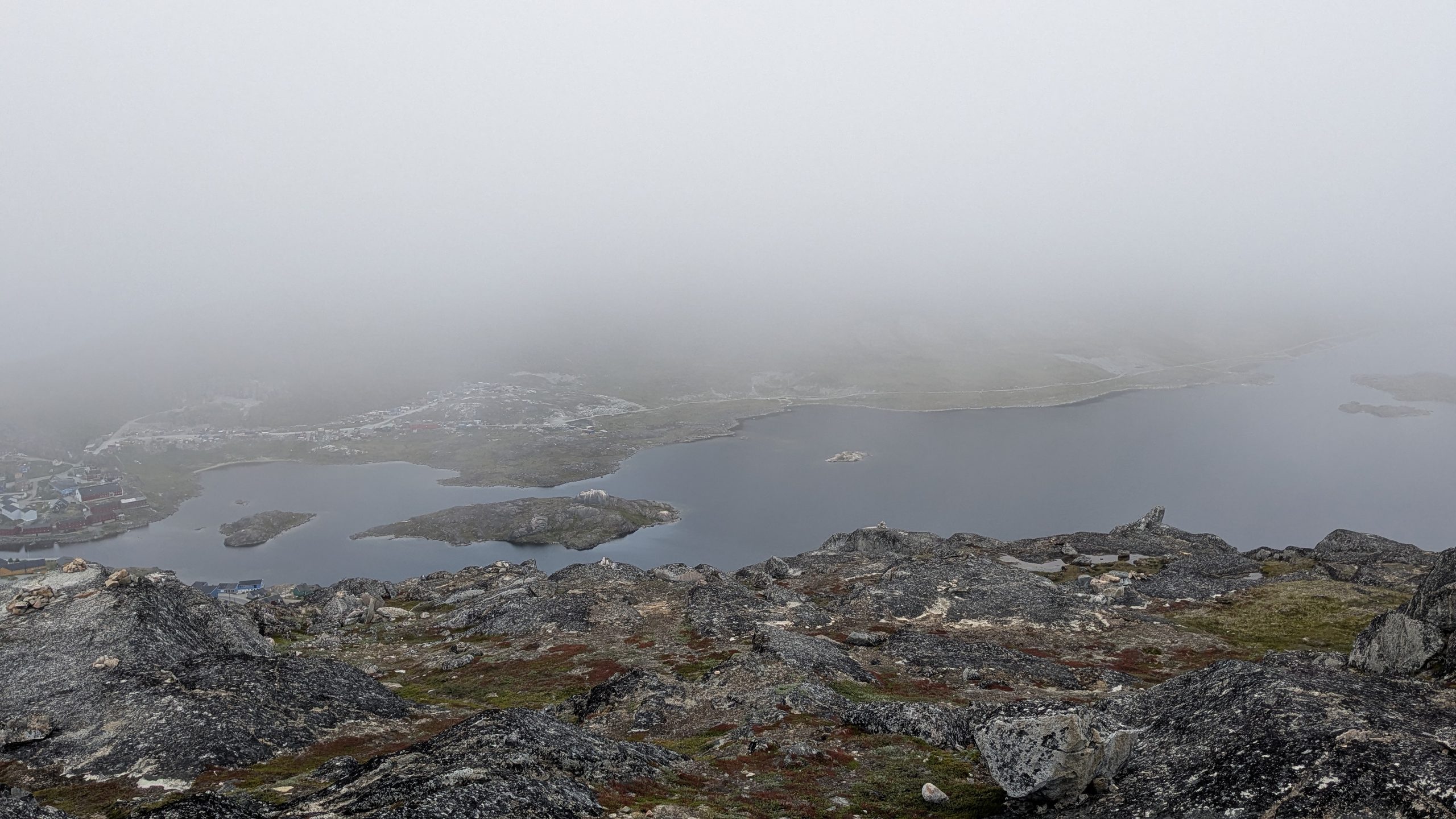

By the time we reached the summit, clouds had rolled in and unfortunately obscured the view.
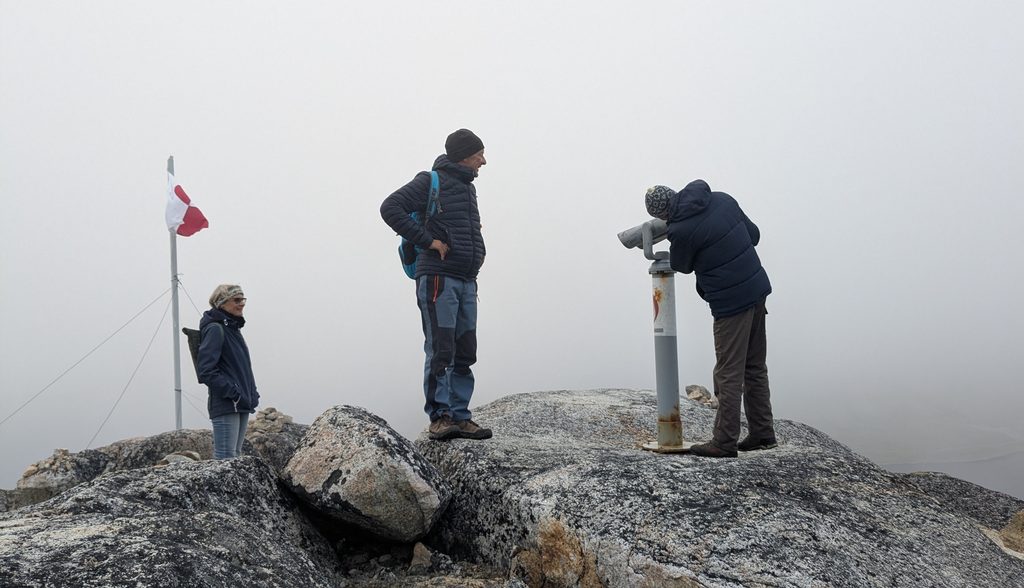
Despite returning well past 11 p.m., the view of Qaqortoq made the late hour entirely worthwhile. It is fascinating that it stays light almost the entire night.
During our two-day stay in Qaqortoq, we explored the local supermarket—which boasted a surprisingly large selection of fresh produce—and visited several chandleries and hardware stores in search of a spare part for our autopilot. Although we didn’t find the part we needed, we successfully picked up a 220V shore power adapter, which will be essential for our time in Europe.
Leave a Reply